Sales organizations often don't have an outbound volume problem. They have a research problem. Reps spend too much of the day stitching together LinkedIn, CRM notes, company pages, hiring pages, and sequence tools just to send one email that still sounds generic. That's the bleeding neck in outbound. Manual research is slow, generic outreach underperforms, and the stack itself often makes the problem worse.
That's why outbound sales tools matter. The category started by reducing manual prospecting and follow-up work through a unified workflow for CRM, sequencing, and analytics. Today, the basic stack still usually comes down to three core layers: a CRM like Salesforce or HubSpot, a contact database like Apollo.io or ZoomInfo, and a sequencer like Outreach or Salesloft, as outlined in Influ2's outbound stack overview. The difference now is that the best teams don't stop at those foundations. They add signal-based research and workflow automation so reps can prioritize the right accounts and send messages that sound informed.
I'd group the best outbound sales tools by job-to-be-done: research, engagement, and data. That framing makes stack decisions simpler and helps you avoid buying overlapping software that adds more tabs than throughput.
1. PitchSmart
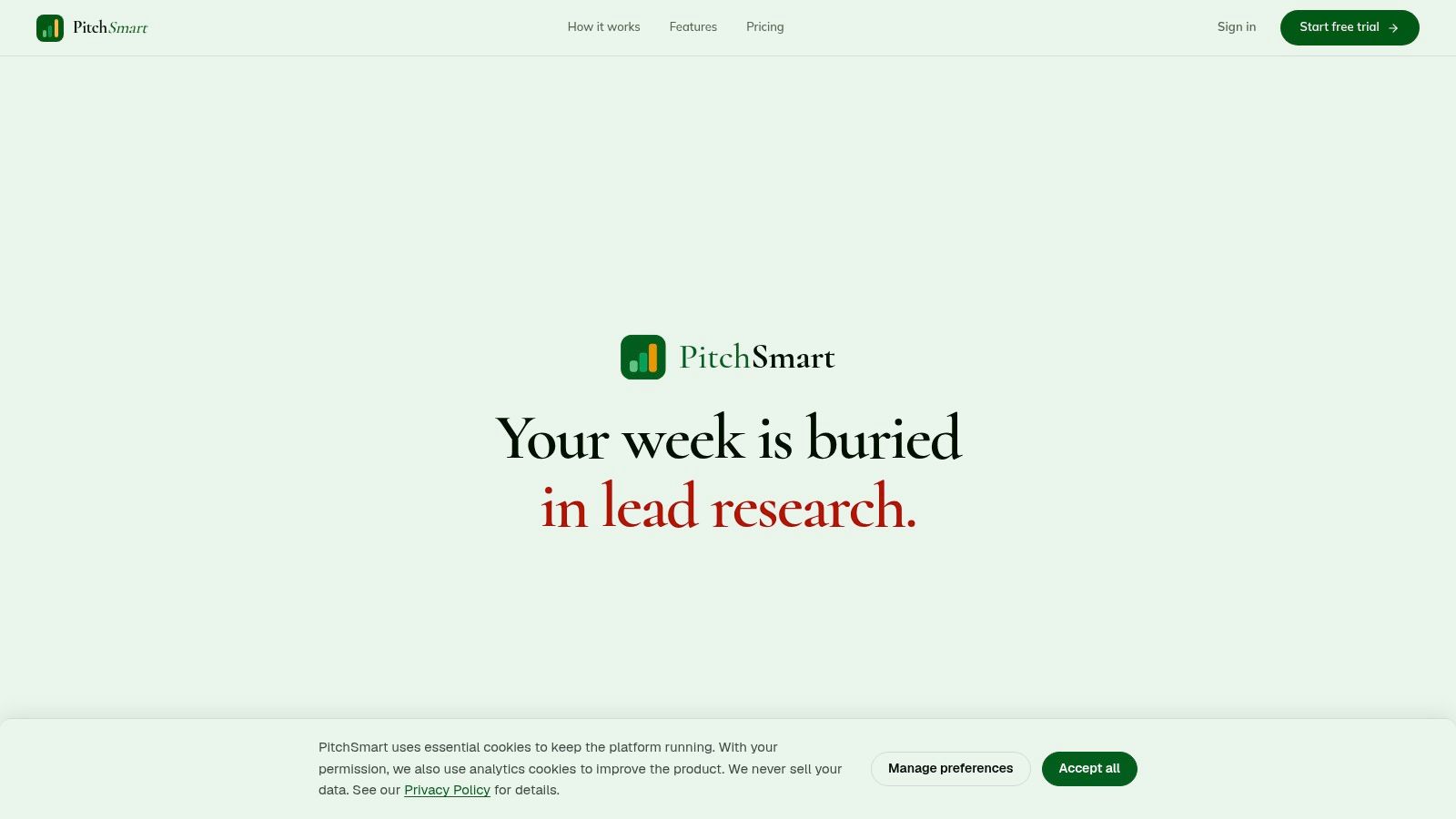
PitchSmart is the tool I'd put at the top of the research category because it fixes the ugliest part of outbound. It doesn't try to be your CRM or your sequencer. It takes the list you already have, researches it in parallel, surfaces buying signals and fit signals, and turns that research into usable outreach drafts and conversation angles.
That matters because most outbound teams already have leads sitting in Apollo, LinkedIn, Salesforce, or HubSpot. The primary bottleneck is turning those names into relevant first touches without making reps live in twenty tabs. PitchSmart is built for that exact handoff.
Why it stands out
PitchSmart runs bulk, source-cited research across your uploaded list or CRM export. Instead of renting another database, it works from your own targets and attaches recent public signals, qualification points, and specific hooks to each account. It also generates a three-step outreach sequence per contact, including an initial email and two follow-ups, so the research doesn't die in a notes field.
Practical rule: If your reps already have lists but still write cold emails one prospect at a time, you don't need more records. You need faster research and better context.
A few things make it especially useful in a real sales ops workflow:
- Research-first output: You get signal-backed conversation points before reps hit send.
- Bulk workflow: It handles entire batches instead of forcing one-by-one prospect review.
- Rep control: Nothing goes out automatically. Reps can review, edit, and export.
- Flexible handoff: It fits neatly into existing sequencers and inbox workflows.
One useful next step is PitchSmart's own outbound playbook articles on the PitchSmart blog, which are aligned with how the product is meant to be used.
Best fit and trade-offs
PitchSmart is best for B2B teams selling higher-ticket offers where relevance matters more than brute send volume. SDRs, BDRs, agencies, and RevOps teams can use it to standardize research quality without forcing everyone into the same manual process.
The trade-off is simple. It's not a lead-finding database, so teams without a list need another source for contact discovery. That's a feature, not a flaw, if your problem is personalization bottlenecks rather than top-of-funnel sourcing.
2. Outreach
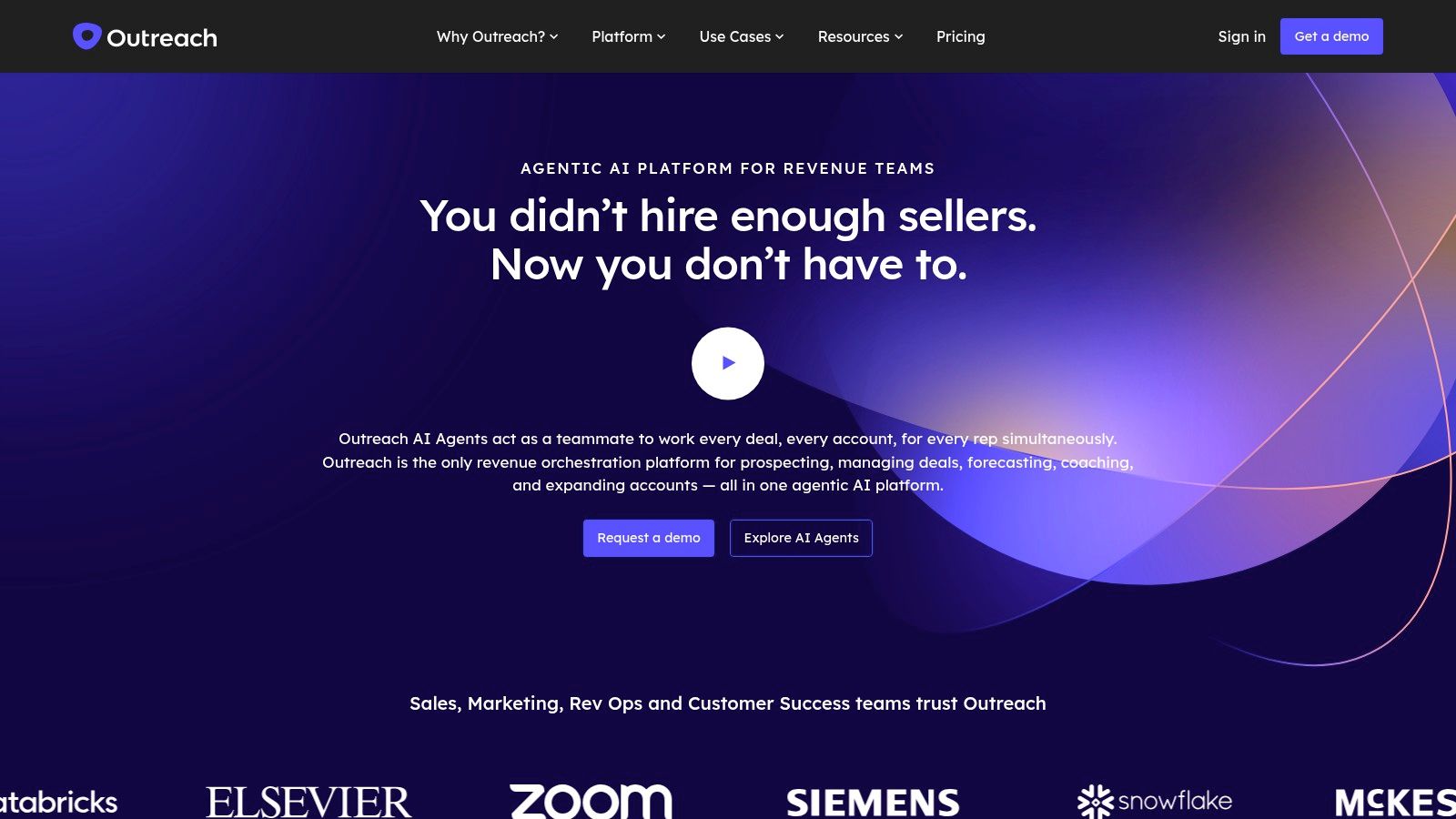
Outreach is the engagement layer a lot of larger teams standardize on when they want structure, governance, and cross-functional visibility. It's more than a sequencer. It sits closer to a revenue execution platform, with sequencing, conversation intelligence, forecasting, and workflow controls in one system.
For enterprise teams, that breadth is the point. You can coordinate outbound, monitor rep behavior, and keep managers and ops in the same operating system.
Where Outreach wins
Outreach is strongest when process discipline matters as much as activity volume. Teams with multiple SDR pods, layered approvals, and CRM complexity usually get more value from it than teams just trying to send a few clean sequences.
Outreach works best when you already know your motion and need consistency across people, territories, and managers.
Its practical strengths are easy to see:
- Multichannel execution: Email, call, and social steps live in one cadence structure.
- Operational control: Roles, permissions, and governance are built for larger orgs.
- Beyond top of funnel: Coaching and forecasting keep it relevant after initial outreach.
The downside is overhead. Smaller teams often buy far more platform than they'll use, then still need a better research layer upstream. If the email copy is generic and the account context is thin, Outreach will help you scale mediocre outreach very efficiently. Used with a strong research tool, it becomes much more powerful.
You can review the platform at Outreach.
3. Salesloft
Salesloft has stayed relevant for a reason. It's one of the safer choices for teams that want a mature engagement platform with strong coaching and action prioritization built in. In practice, it tends to appeal to organizations that want enterprise-grade sequencing without making the rep experience feel overly rigid.
Its core value isn't novelty. It's reliability.
What Salesloft does well
Cadences, call coaching, analytics, and CRM synchronization are the center of gravity here. The platform's action-prioritization approach is useful for teams that need help deciding what reps should do next, not just where to click to send the next email.
If I were evaluating Salesloft operationally, I'd look at two things first. How clean is your CRM sync, and how much manager coaching do you want inside the same platform? Salesloft is stronger when those answers are “very” and “a lot.”
- Mature sequencing: Good fit for repeatable, manager-led outbound motions.
- Coaching support: Helpful when call review and rep development matter.
- Analytics depth: Better than lighter outbound tools that stop at opens and replies.
The trade-off is familiar. It can feel heavy for teams that only need straightforward cold email or a lightweight multichannel cadence. If your stack already includes separate coaching or forecasting layers, some of Salesloft's value may overlap.
The product site is Salesloft.
4. Apollo
Apollo is popular because it reduces stack sprawl for smaller teams. You can build lists, enrich contacts, and run outreach in the same environment. For startups and lean outbound teams, that convenience matters more than perfect specialization.
It's usually the fastest way to get a program off the ground without stitching together three vendors on day one.
Why Apollo is popular
Apollo sits in the middle of the market nicely. It gives teams a prospect database, sequencing, workflow automation, and a Chrome extension without the heavier implementation burden of enterprise platforms.
That all-in-one setup helps new teams move quickly, but it comes with a common trade-off. When one tool handles both data and engagement, teams sometimes accept weaker data quality because the workflow feels smooth.
- Fast startup motion: Good for getting list-building and outreach live quickly.
- Lower operational friction: Fewer handoffs between sourcing and sequencing.
- Accessible for SMB teams: Useful when budget and admin capacity are limited.
Apollo is strongest when speed matters more than deep governance. It's less ideal when your ICP is narrow and every bad contact record creates wasted rep work. In those cases, pairing a broad database with a separate research layer often produces a cleaner workflow.
You can explore it at Apollo.
5. ZoomInfo SalesOS + Engage
ZoomInfo is what many teams buy when they want a large data layer and prefer to consolidate under one vendor. One industry roundup notes that ZoomInfo's platform includes 321M+ professional contacts and 104M+ company profiles, and the same roundup points to broader market availability of over 350 million B2B contacts through outbound platforms such as Artisan. It also notes that ZoomInfo can surface in-market accounts, recommend contacts, and automate research and follow-up prep, which shows how modern outbound tools have become data and workflow systems rather than simple email products, according to Artisan's outbound tools roundup.
That scale is useful, but database size alone shouldn't drive the decision.
Best use case
ZoomInfo SalesOS plus Engage works best for larger North American sales teams that want deep sourcing, intent, enrichment, and execution under one umbrella. If your buying committee wants fewer vendors and your ops team cares about controls, ZoomInfo checks that box.
What I like in practice is the consolidation. What I'd watch carefully is whether reps trust the records enough to stop verifying them manually. Large coverage is valuable, but only if the data fits your ICP and territory reality.
Big databases solve coverage. They don't automatically solve relevance, freshness, or messaging quality.
For teams that run phone-heavy outbound in the U.S. and want one vendor for both data and engagement, ZoomInfo remains a serious option. For teams doing highly customized outbound, I'd still pair broad data coverage with a workflow that adds account-specific research before the sequence starts.
Visit ZoomInfo.
6. Cognism
Cognism earns its place by being more opinionated about global prospecting and compliance than many U.S.-centric data vendors. If your team sells across EMEA or runs phone-led outbound where verified mobile data matters, Cognism is often easier to justify than broader but less regionally focused databases.
That's especially true when compliance review slows every tooling decision.
Where Cognism earns its spot
Cognism is best thought of as a sales intelligence platform with a practical bias toward compliant prospecting. It's useful for CRM enrichment, list building, and Data-as-a-Service workflows where ops needs cleaner delivery into the systems reps already use.
A good fit usually looks like this:
- EMEA coverage matters: You need stronger international prospecting support.
- Phone outreach is important: Verified mobiles are a material part of the motion.
- Compliance review is strict: Legal and ops need confidence before rollout.
The trade-off is that some teams will still prefer larger U.S.-heavy databases for domestic scale. But if your outbound motion lives across regions, “largest” isn't always the same as “best.” Cognism is one of the clearer examples of that.
You can evaluate it at Cognism.
7. Reply.io
Reply.io is a good fit for teams that care about multichannel automation but don't want to jump straight into heavyweight enterprise software. It's flexible, practical, and usually easier to adapt for agencies or distributed outbound teams managing multiple inboxes.
That flexibility is its main advantage.
Who should choose Reply.io
Reply.io supports email, LinkedIn, calls, SMS, and WhatsApp, which makes it attractive for teams testing different channel mixes. It also bundles deliverability-oriented features, which can reduce the number of extra tools you need around inbox health and warm-up.
The AI SDR layer is interesting, but I'd evaluate it conservatively. In most orgs, the value still comes from cleaner workflow automation and channel orchestration rather than handing too much prospecting logic to a bot.
- Agency-friendly setup: Useful when multiple clients or inbox pools are involved.
- Broad channel mix: Stronger than email-only tools for blended outreach.
- Good operational flexibility: Helpful for teams that don't fit a rigid seat-based model.
If your team already has a research process and just needs an execution engine with decent flexibility, Reply.io can work well. If your outreach quality is weak because reps still don't know what to say, solve that upstream first.
See Reply.io.
8. lemlist
lemlist is one of the more practical choices for teams that want outreach plus deliverability support in the same environment. That matters because many outbound programs don't fail on sequence design. They fail because infrastructure is sloppy and inbox placement degrades before anyone notices.
lemlist is built with that operational reality in mind.
What lemlist is good at
The platform combines multichannel outreach, lead finding, verification support, and deliverability tooling such as warm-up and domain utilities. That makes it attractive for teams that need to scale volume carefully without building a separate infrastructure stack from scratch.
One reason teams like it is pricing transparency around certain add-ons and usage patterns. The caution is that variable-cost components can creep up if you lean heavily on paid signals or phone data.
If your reps are asking for better reply rates while your sending setup is unstable, fix deliverability before rewriting another sequence.
lemlist works best for hands-on teams that want to tune outbound mechanics themselves. It's less attractive if you want deep enterprise governance or highly structured forecasting inside the same tool.
You can review it at lemlist.
9. Mailshake
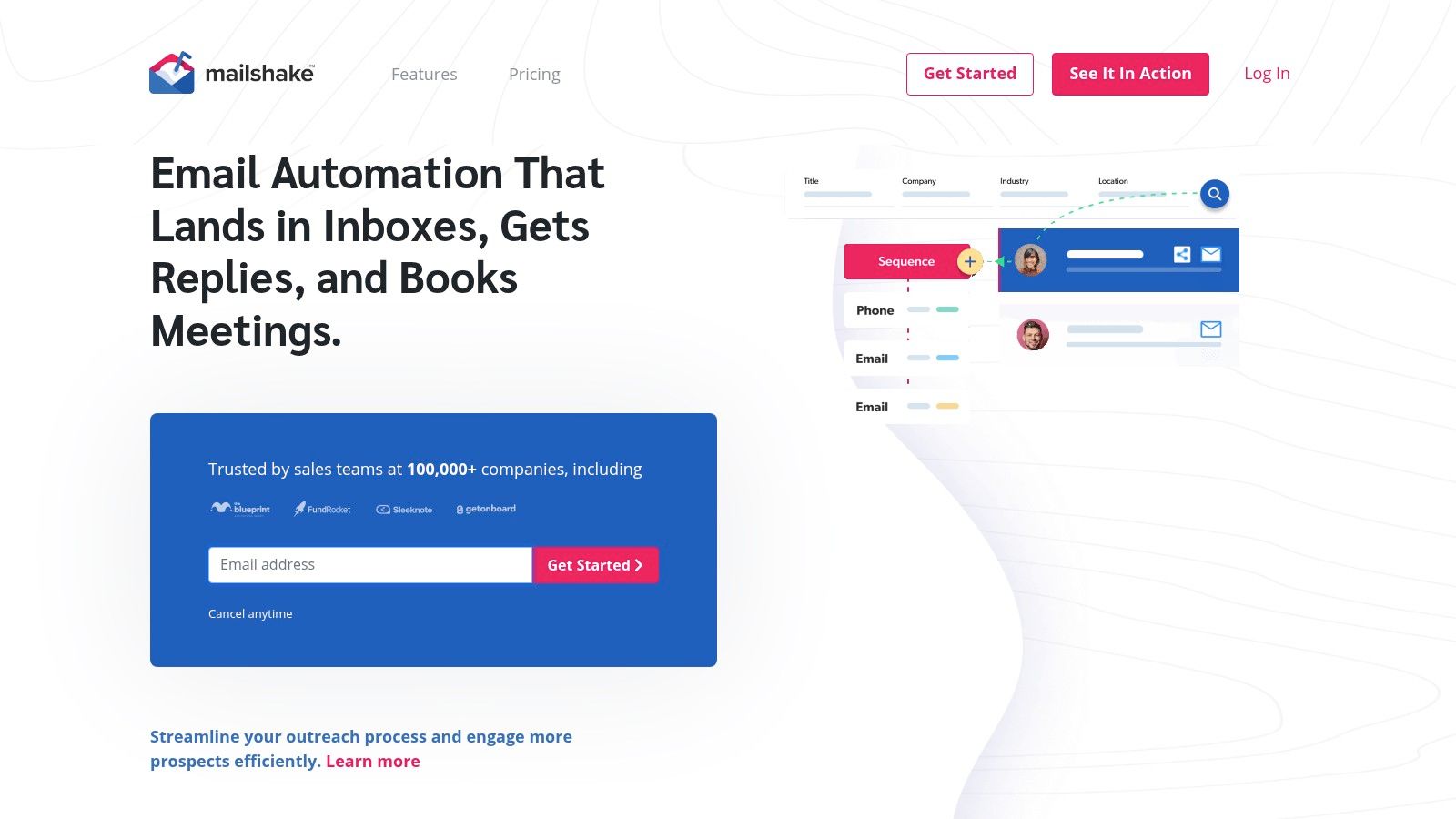
Mailshake is the tool I'd point smaller teams to when they want something simple that can be live quickly. It doesn't try to be the most expansive platform in the category. It focuses on sequencing, dialing, and ease of use.
That restraint is a strength.
Best use case
Mailshake fits startups, lean agencies, and small outbound pods that need a straightforward way to run cold outreach without a long admin cycle. The learning curve is low, and that matters when a founder, first SDR, or agency operator needs productivity now, not after a long setup project.
Its practical appeal comes down to three things:
- Fast adoption: Reps usually don't need much training.
- Core functionality only: Enough for email and simple calling motions.
- Reasonable operational footprint: Fewer settings, fewer dependencies, less overhead.
The trade-off is ceiling. Larger teams often outgrow it once they need deeper analytics, stricter permissions, or a more advanced multichannel workflow. But for a lot of SMB programs, simple and stable beats feature-rich and unused.
Mailshake is available at Mailshake.
10. Mixmax
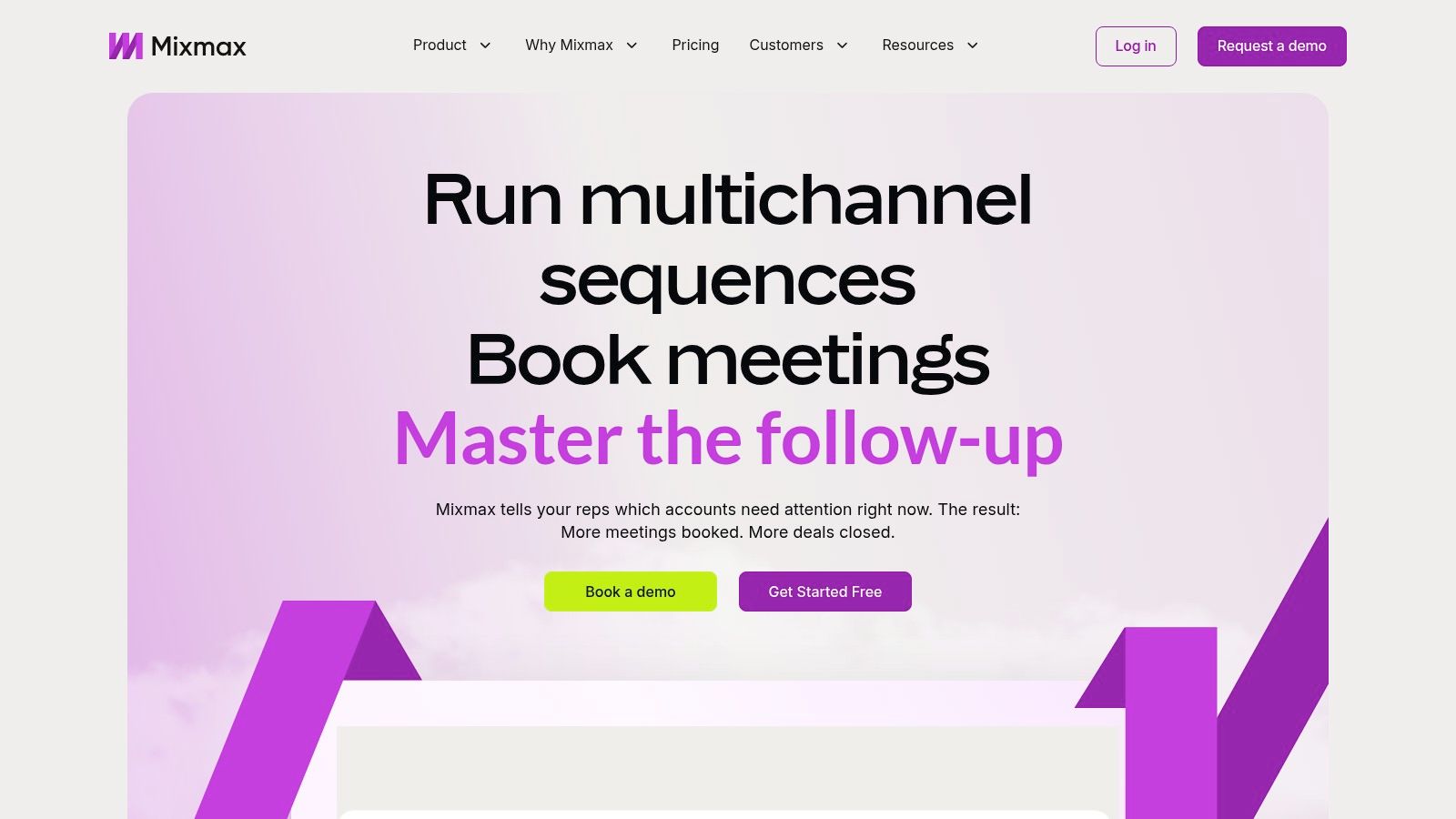
Mixmax makes the most sense for teams that live in Gmail and want outbound workflow automation without forcing reps into a heavy standalone system. It feels closer to an inbox-native productivity layer than a traditional top-down sales engagement platform.
That can be a major adoption advantage.
Why teams choose Mixmax
Mixmax covers sequencing, email tracking, scheduling, meeting prep, and follow-up support with a user experience that's comfortable for Google Workspace teams. For reps who spend most of the day in Gmail, that native feel often drives better usage than more complex systems.
I like Mixmax when the workflow is rep-driven and meeting-heavy. It's especially practical for account executives or founder-led sellers who want outbound help without a full enterprise rollout.
- Strong Gmail experience: Good fit for inbox-first reps.
- Scheduling and meeting workflow: More polished than many simple sequencers.
- Modular buying approach: Useful if you don't need every capability at once.
The caution is obvious. If your organization is Outlook-heavy or wants a broad governance layer across a large SDR team, verify the fit carefully before standardizing on it.
You can learn more at Mixmax.
Top 10 Outbound Sales Tools Comparison
| Product | Core features ✨ | UX/Quality ★ | Best for 👥 | Price / Value 💰 |
|---|---|---|---|---|
| 🏆 PitchSmart | ✨ Bulk, parallel signal-backed research; source-cited insights + 3 tailored email drafts per contact | ★★★★★ Fast results (10–15m batches); high personalization & verified sources | 👥 SDRs/BDRs, high-ticket B2B outbound teams | 💰 Free trial (no CC); free 10 leads/mo; paid tiers (not public) |
| Outreach | ✨ Enterprise multichannel sequencing + AI agents, forecasting & governance | ★★★★ Robust, feature-rich; can be complex | 👥 Large enterprises needing end‑to‑end revenue ops | 💰 Quote-based; consumption/AI credits |
| Salesloft | ✨ Cadences, conversation intelligence, "Rhythm" next-best actions & analytics | ★★★★ Mature UX with strong CRM sync | 👥 Mid-market & enterprise sales teams | 💰 Quote-based; implementation often required |
| Apollo | ✨ Prospect database + enrichment, sequencer, Chrome extension | ★★★★ Fast list-building; data quality varies by ICP | 👥 SMBs, startups and lean GTM teams | 💰 Free tier + affordable plans; credit model for heavy use |
| ZoomInfo SalesOS + Engage | ✨ Large data coverage + intent signals, enrichment & Engage sequencing | ★★★★ Deep data & engagement; enterprise overhead | 👥 Enterprise GTM teams needing broad US data | 💰 Quote-based; tiered annual packages |
| Cognism | ✨ GDPR-first global database, verified mobiles & DaaS options | ★★★★ Strong compliance & phone data in EMEA | 👥 EMEA-focused teams and phone-led outbound | 💰 Quote-based; credits model |
| Reply.io | ✨ Multichannel automation, AI SDR add-on, deliverability tools | ★★★★ Flexible automations; deliverability-focused | 👥 Agencies & teams managing many inboxes | 💰 Per-seat or per-volume pricing; add-ons may apply |
| lemlist | ✨ Built-in finder/verifier, deliverability hub, AI personalization | ★★★★ Transparent tooling; scalable multichannel | 👥 Growing teams scaling from email to full multichannel | 💰 Transparent micro-credits for data/signals |
| Mailshake | ✨ Lightweight sequencing + power dialer & unified inbox | ★★★★ Very quick setup; easy to deploy | 👥 Startups, agencies and lean outbound teams | 💰 Affordable plans; good ROI for small teams |
| Mixmax | ✨ Gmail-native Copilots (email, inbox, meeting) + sequencing | ★★★★★ Excellent Gmail UX; strong calendaring | 👥 Google Workspace teams focused on inbox workflows | 💰 Modular pricing; a la carte can add up |
How to Stack Them
The mistake I see most often is buying multiple outbound sales tools that overlap on execution while leaving research broken. Reps end up with a database, another database, a sequencer, a writing assistant, and a call tool, but they still don't know which accounts deserve priority or what message angle to use.
That's where category discipline helps. Keep the stack organized by job.
Research plus engagement is the practical sweet spot
A strong outbound stack usually has three layers. First, a CRM to hold truth and workflow. Second, a data source for prospect discovery or enrichment. Third, an engagement platform for sequences and tasking. The missing layer for many teams is research orchestration, which is exactly where manual work piles up and personalization quality drops.
One 2026 industry analysis reported that signal-based AI prospecting reaches reply rates of 5 to 25 percent versus about 3 percent for traditional outbound, and teams using signal-qualified leads report better conversion, larger average deal sizes, and more closed deals per quarter, according to Autobound's 2026 analysis of AI sales prospecting. The practical takeaway isn't “buy more AI.” It's “prioritize tools that turn live signals into better account selection and better outreach.”
Simple stack recommendations
If I were building stacks by team type, I'd keep it this simple:
- For SMB outbound teams: Apollo for data plus light outreach, or Mailshake for simple sequencing, then add PitchSmart for bulk research and conversation hooks before prospects enter cadence.
- For mid-market teams: Apollo or Cognism for data, PitchSmart for signal-backed research and segmentation, and Salesloft or Reply.io for execution.
- For enterprise teams: ZoomInfo or Cognism for data coverage, PitchSmart for research standardization across target lists, and Outreach or Salesloft for governed multichannel execution.
The cleanest stack isn't the one with the most features. It's the one where each tool has one clear job and reps don't need to retype the same context three times.
PitchSmart fits cleanly into this model because it complements engagement platforms rather than trying to replace them. It strengthens the top of the workflow. Reps start with better research, better segmentation, and better opening angles, then use Outreach, Salesloft, Apollo, or another sequencer to execute at scale.
Final Thoughts
Outbound sales tools are no longer just email senders with a few templates attached. The category has moved from basic automation toward large-scale data systems, AI-assisted workflows, and signal-based prioritization. One 2026 synthesis reports that 41% of enterprise B2B teams have at least one AI SDR running in production, up from 12% a year earlier, and that hybrid AI SDR pods have reduced cost per qualified opportunity by 54% while cutting ramp time from 4.7 months to 24 days, according to Digital Applied's 2026 AI SDR statistics roundup. The message for operators is straightforward. The stack is shifting from simple activity automation to throughput systems that help teams do more without scaling headcount linearly.
But buying more software isn't the answer by itself. Tool overload is real. One underserved but important sales ops issue is fragmentation. Many teams now run five or more tools across prospecting, outreach, CRM, and analytics, yet only a minority report smooth integration, which creates a measurable productivity drag through context switching and sync errors, as noted in the Gartner-based stack fragmentation finding included in the verified data above. That's why I'd rather see a team simplify jobs-to-be-done than add another point solution with overlapping features.
The biggest practical split in this market is between tools that help you find people, tools that help you engage people, and tools that help you understand why a specific person should care right now. That last category is where many teams still underinvest. Massive databases are useful. Sequencers are necessary. But neither solves the painful middle step where reps turn a target list into relevant outreach.
That's why PitchSmart stands out in this lineup. It doesn't ask you to rip out your engagement platform. It fixes the part of outbound that many teams still do badly by hand: list-by-list research, signal discovery, segmentation, and first-message development. If your reps already have names but still struggle to produce outreach that sounds timely and informed, that's usually the most impactful place to improve the stack.
The best outbound sales tools don't just help reps do more activity. They help teams decide who to contact, why now, and what to say. That's the difference between a busier SDR function and a better one.
If your team already has lead lists but still loses hours to manual research and generic first touches, PitchSmart is the easiest place to tighten the workflow. Upload a list, let it run bulk research, review the signal-backed hooks and sequence drafts, then push the finished output into the engagement tool you already use.