Stop Wasting 70% of Your Sales Day on Busywork
Your sales reps are hired to sell, but they're spending up to 70% of their day on non-selling tasks like manual research, data entry, admin work, and prospecting, according to Salesforce's 2025 global sales report cited by Vidyard's summary of sales productivity trends. That's the bleeding neck in modern outbound. Reps aren't losing deals because they forgot how to talk to buyers. They're losing deals because too much of the day disappears before a real conversation even starts.
That wasted time shows up everywhere. SDRs jump between tabs to find a useful trigger. AEs inherit thin account context and send generic follow-ups. Managers buy another engagement tool, but the output still underperforms because the inputs are weak. If the research is bad, the sequence is bad. If the sequence is bad, the reply rate suffers. If the reply rate suffers, every downstream metric gets harder.
The fix isn't adding random software. It's building a stack around the actual outbound workflow. Research comes first. Then engagement. Then intelligence. That sequence matters because a polished sequencer can't rescue poor targeting, and call analytics won't fix outreach that never should have been sent.
The best sales productivity tools give your team an advantage where it counts. They reduce admin drag, improve signal quality, and help reps spend more time in revenue-generating conversations. The strongest stacks also solve the garbage in, garbage out problem by putting research-first tools at the front of the process.
1. PitchSmart
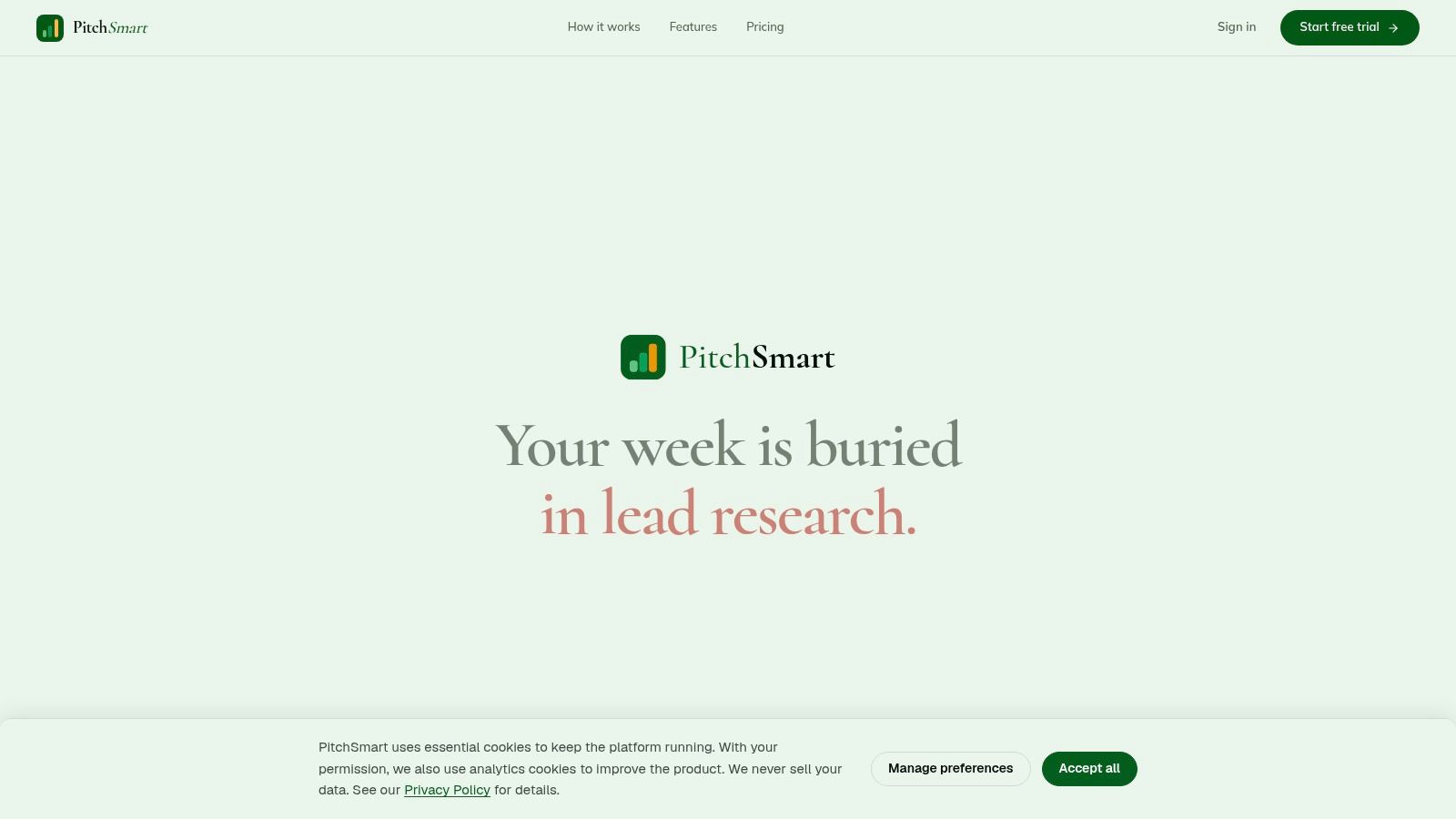
PitchSmart is the research-first tool in this list, and that matters more than many realize. In outbound, weak research poisons everything downstream. Reps send generic cold emails because they don't have usable context, managers blame execution, and the team adds another sequencer instead of fixing the actual problem.
PitchSmart takes an existing lead list and does the work reps usually do one account at a time. Upload a CSV or export prospects from your CRM, and it researches accounts in parallel, pulls in public signals, ties those signals back to sources, scores fit, and gives reps a usable research summary plus personalized draft outreach. That's the right starting point for a modern outbound stack because it improves the raw material before a sequence ever launches.
Why PitchSmart belongs at the front of the stack
The strongest reason to use PitchSmart is simple. It attacks manual research directly. The broader market for AI productivity tools reflects the pressure sales teams are under, and organizations using these tools report reclaiming 12 hours per week per rep, with leaders expecting meaningful productivity gains from AI and enablement platforms according to Market.us coverage of the AI productivity tools market.
PitchSmart is built for the part of the workflow most tools skip. It handles bulk, customizable lead research with proprietary data points, surfaces activity-based conversational hooks from recent online signals, and seeds automated 3-step email and LinkedIn sequences from the best hooks. It also supports advanced list segmentation based on buying signals, which is exactly what teams need when “personalization” has become shorthand for changing one sentence in a template.
Practical rule: If your reps still open multiple tabs to figure out why a prospect should care, research is your bottleneck, not email copy.
There are a few implementation details I like. It's CSV-friendly, so it works with existing systems without forcing a full stack migration. It only uses public signals, preserves source transparency, and keeps the output editable by reps.
Where it fits and where it does not
PitchSmart is best for SDRs, BDRs, outbound AEs, RevOps teams, and agencies that already have lists and need those lists turned into better outreach. It isn't a lead discovery database. If you need raw contact sourcing, you'll still pair it with a prospecting source such as Apollo or LinkedIn.
That trade-off is worth being honest about. The product is narrower than an all-in-one platform, but that focus is its strength. Instead of becoming another bloated workspace, it solves the ugly front-end problem most outbound teams still handle manually. For teams that care about evidence-backed outreach and cleaner inputs, PitchSmart is the best foundation on this list.
2. Outreach
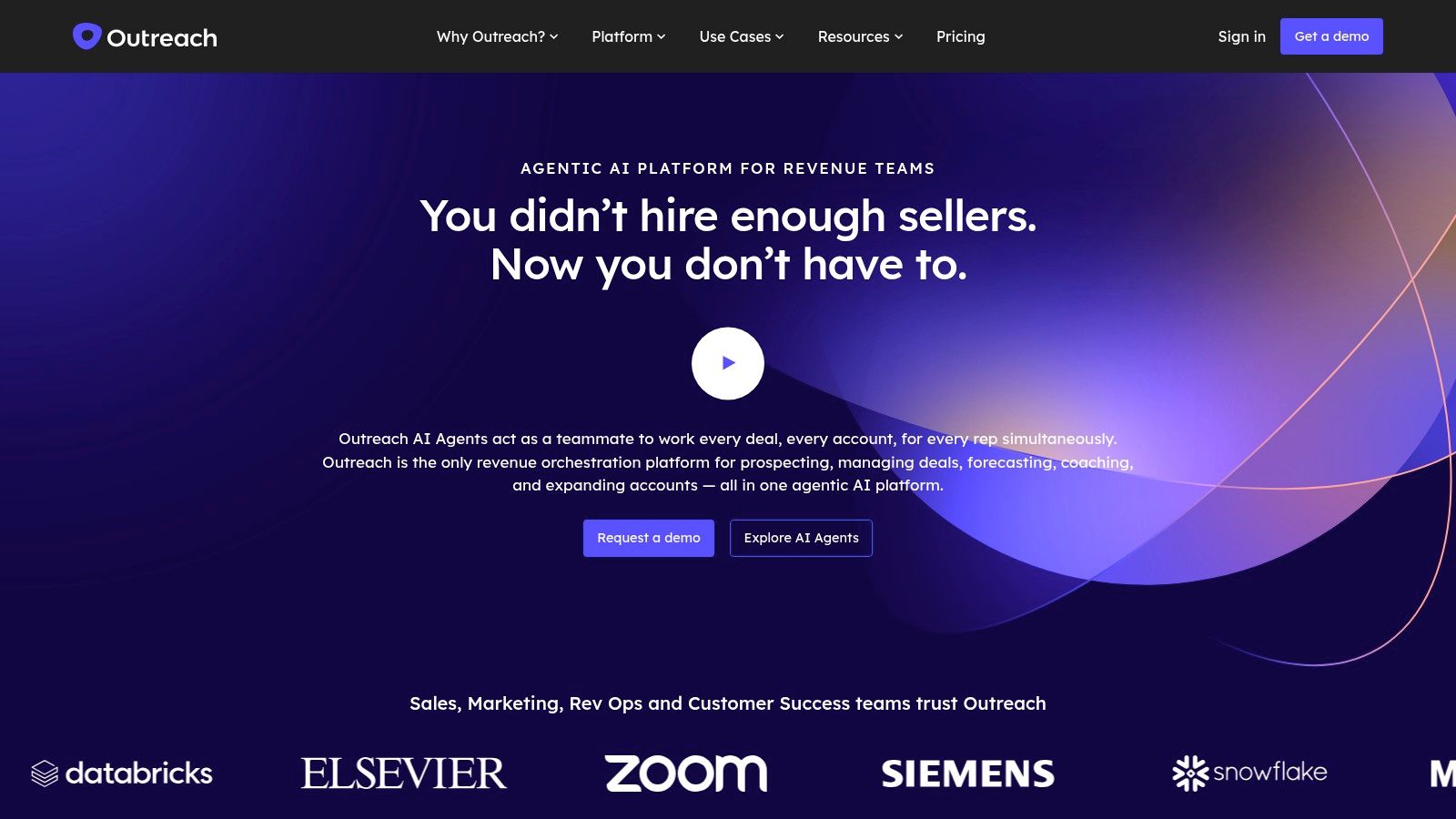
Outreach is built for sales organizations that want control. Not just sequencing, but governance, forecasting, activity capture, coaching, and a common operating layer for large teams. If you're running enterprise outbound with multiple segments, territories, and managers, that structure is valuable.
Where Outreach shines is orchestration. You can standardize cadences across email, calls, and social, track execution, and give leadership a clearer view of what the team is doing. That's useful when reps need a system, not just a mailbox with templates.
Where Outreach earns its place
Outreach is a better fit for teams that already know their process and need scale. It's less compelling when the core issue is poor research quality. A powerful engagement engine can send a lot of bad messaging very efficiently if your targeting and account context are weak.
Its strengths are straightforward:
- Mature workflow control: Strong sequence management, task coordination, and rep guidance.
- Enterprise readiness: Deep CRM sync, security controls, admin oversight, and auditability.
- Broader revenue coverage: Conversation intelligence and forecasting capabilities help managers run the floor, not just the inbox.
The trade-off is weight. Outreach can be a heavy implementation for smaller teams, and quote-based pricing usually means you need a clear operating model before you buy.
Bad research multiplied by strong automation is still bad outbound.
That's why Outreach works best behind a research-first layer. Feed it better signals from a tool like PitchSmart, and it becomes much more effective. Start with Outreach before fixing your inputs, and you may just automate mediocrity. Learn more at Outreach.
3. Salesloft
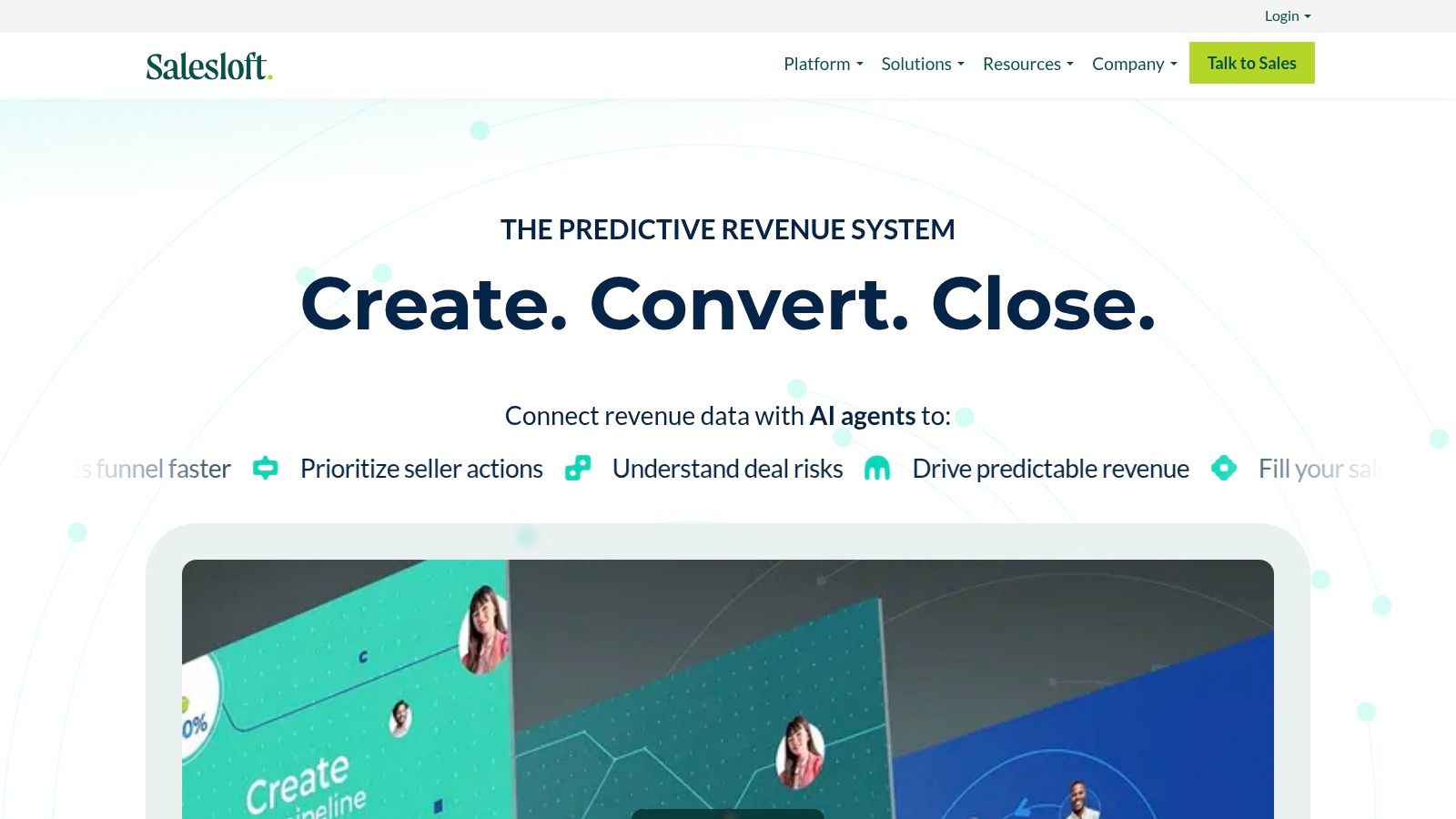
Salesloft has a similar buyer to Outreach, but the experience feels different. It's often easier for frontline teams to adopt because the workflow is more rep-centered. Rhythm, in particular, is good at turning a messy day into a prioritized set of actions that sellers can follow.
That matters because a lot of sales productivity tools fail on adoption, not capability. The feature list looks great in a demo, but reps still work from memory, Slack messages, and whatever sits on top of the inbox. Salesloft does a better job of translating system data into a practical daily motion.
Why frontline teams adopt it quickly
Salesloft is strong when you want one platform to cover cadences, conversation analysis, deal workflows, and forecasting without asking reps to live in six different interfaces. For managers, that reduces tool hopping. For reps, it creates a clearer “what should I do next” view.
A few clear pros stand out:
- Rep-friendly daily planning: Rhythm helps sellers prioritize instead of react.
- Broad module coverage: Conversations, Deals, Forecasting, and Analytics reduce stack fragmentation.
- Good enablement support: Teams usually get solid rollout resources and operational guidance.
The trade-off is cost and setup depth. Salesloft doesn't publish simple list pricing, and complex organizations may need services support to get routing, cadences, governance, and analytics aligned correctly.
One caution from a RevOps standpoint. Don't mistake workflow polish for pipeline quality. Salesloft improves execution, but it doesn't solve the root issue of sending outreach without enough account context. If your reps still start from a weak list, the platform can only optimize so much. You can explore it at Salesloft.
4. Apollo.io
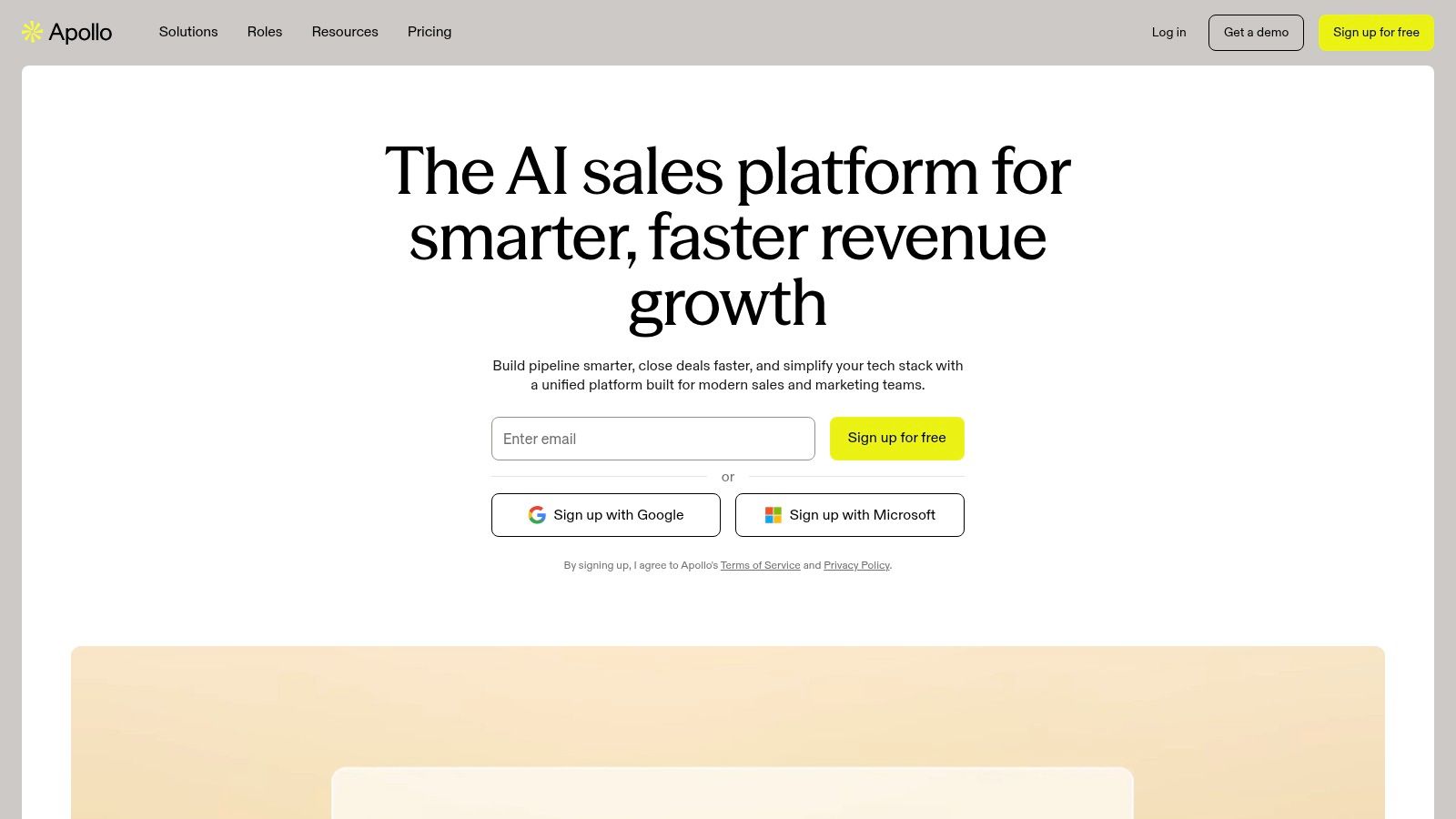
Apollo.io is one of the easiest tools in this category to justify for SMB and mid-market teams because it collapses multiple needs into one vendor. Database, enrichment, sequencing, dialer, task queues, and analytics all live in the same environment. For many teams, that's the appeal.
If your current problem is stack sprawl, Apollo often feels like relief. Instead of stitching together separate tools for contacts, outreach, and basic workflow, you get a more consolidated setup and faster time to value.
Best when consolidation matters more than specialization
Apollo is useful when you need both prospecting and engagement, but don't yet need enterprise-grade complexity. It can reduce the friction of getting started, especially for smaller teams that need motion quickly.
Its practical strengths are clear:
- Single-vendor convenience: Data and engagement in one place can simplify operations.
- Fast onboarding: Teams can launch quickly without a long implementation cycle.
- Broad everyday utility: Sequencing, dialer, and meeting sync cover the basic outbound workflow well.
The trade-off is that convenience isn't the same as precision. Database-driven outreach still benefits from deeper research before launch. If your message depends on timely public signals, actual account activity, or source-cited buying triggers, a general-purpose database won't fully replace a dedicated research layer.
There's also the usual issue with credit-driven products. Forecasting usage can get messy, especially when multiple reps enrich, export, and sequence at scale. Apollo is strong when you want one place to operate, but it's less strong when your team needs highly transparent, signal-backed personalization. See Apollo.io.
5. HubSpot Sales Hub
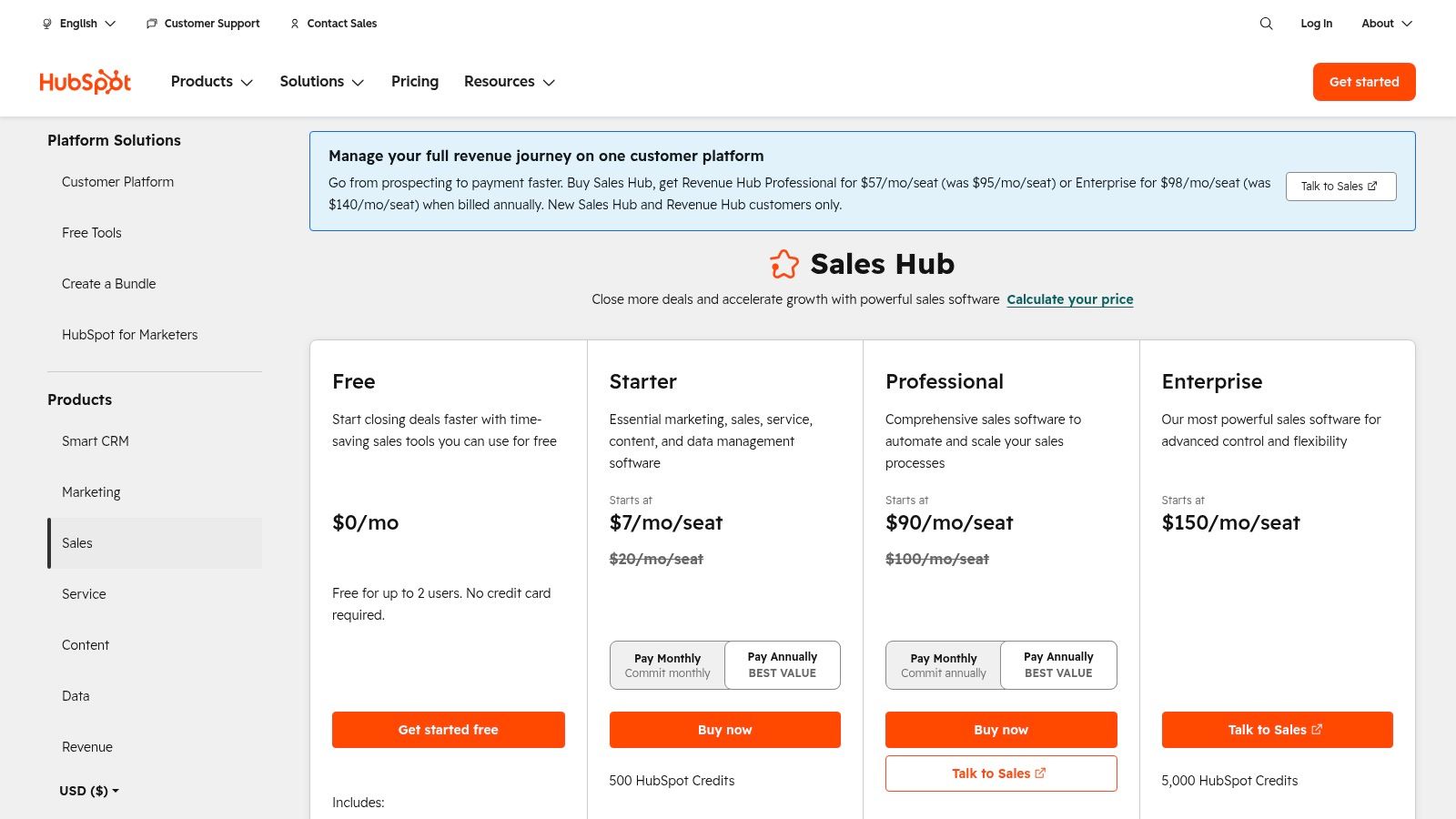
HubSpot Sales Hub is one of the safest recommendations for startups and lean B2B teams because it lowers operational friction. CRM, sequences, meetings, calling, quoting, and reporting sit in a platform that is quickly understandable. That simplicity matters when you're building process maturity and don't have a full-time systems admin.
The biggest advantage is alignment. Sales, marketing, and service can work from the same operating environment, which reduces handoff problems and duplicate data cleanup. For smaller orgs, that often matters more than having the deepest possible outbound feature set.
A strong choice for lean teams building process maturity
HubSpot works well when your team needs structure without enterprise overhead. The UI is approachable, onboarding resources are solid, and public pricing makes buying easier than with quote-only vendors.
What it does well:
- CRM-native execution: Email tracking, task queues, sequences, calling, and forecasting live close to the record.
- Cleaner cross-team alignment: Marketing and service data stay in the same ecosystem.
- Faster operational setup: Lean teams can implement useful process quickly.
The limitation is depth at the high end. Advanced automation and AI features are more constrained unless you move up tiers, and larger outbound teams often outgrow the default sequencing sophistication. Onboarding fees at upper tiers also matter more than buyers expect.
HubSpot is a strong operational center, but it still benefits from better research inputs. In practice, that means using it as the system of record and execution layer, while feeding it higher-quality segmentation and signal-backed messaging from tools designed for outbound research. Explore HubSpot Sales Hub.
6. Clay
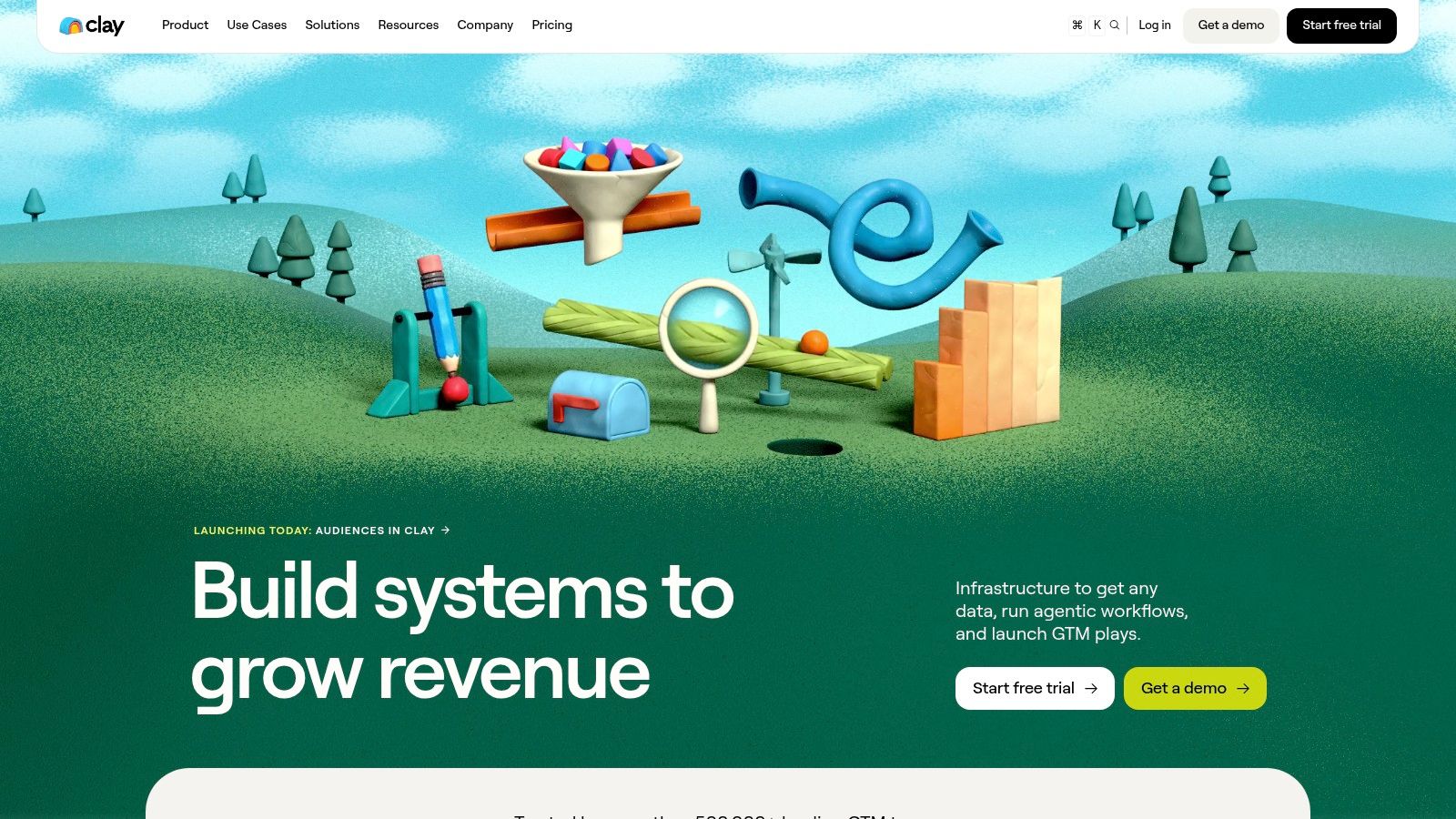
Clay is for teams that want to build their own outbound machinery. It's a research, enrichment, and workflow platform that lets ops-heavy teams combine multiple data providers, add logic, run AI steps, and push outputs downstream. When it's well configured, it can become a very flexible outbound workbench.
That flexibility is exactly why some teams love it and others struggle with it. Clay rewards operators who like workflows, conditions, validation layers, and API-driven thinking. It doesn't reward teams that want a turnkey motion by Friday.
Powerful when you have ops discipline
The strongest use case for Clay is multi-source enrichment with visible provenance and custom logic. That makes it useful for segmentation, de-duplication, list scoring, and orchestrating niche research steps across providers.
A few real advantages:
- Source-aware enrichment: Transparency matters when reps need to trust what they're sending.
- Composability: You can stitch together best-of-breed providers instead of relying on one database.
- Ops enablement: Great for teams that want to build repeatable outbound workflows with control.
There's an important market trend behind this. The sales analytics software market is projected to grow from US$ 5.5 billion in 2026 to US$ 12.5 billion by 2033, and lead scoring and customer segmentation is the fastest-growing sub-segment, according to Persistence Market Research on the sales analytics software market. That lines up with what strong outbound teams already know. Better segmentation and scoring change the quality of execution.
The downside is maintenance load. Complex flows break, vendor logic changes, and action-based pricing requires real usage modeling. Clay is powerful, but it's not lightweight. For many teams, a dedicated research-first product is easier to operationalize, while Clay becomes the right choice when you need more custom control. Learn more at Clay.
7. Orum
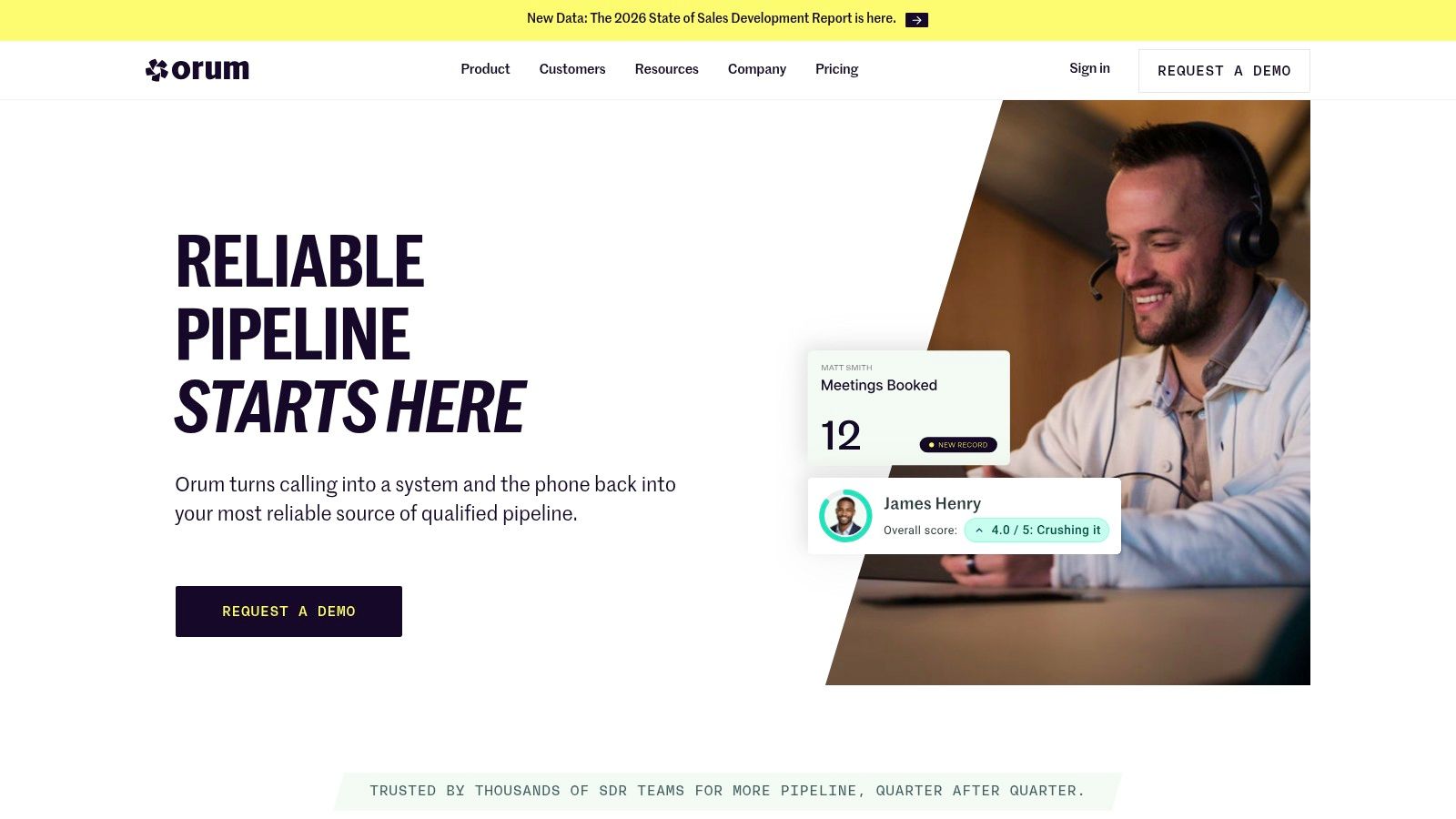
Orum solves a very specific problem. Your reps are ready to call, but dialing manually kills throughput. If your outbound motion depends on live conversations and call blocks are a core part of pipeline generation, Orum can make a real difference.
This is not a general productivity platform. It is a specialist. That's why it can be so effective when your list quality is solid and your team already has a call-heavy motion.
When dialing throughput is the bottleneck
Orum's parallel dialing model increases the number of connection attempts reps can make without adding manual work. CRM logging and call workflow automation also reduce some of the admin drag that usually follows phone-heavy outreach.
Its practical strengths:
- Higher calling throughput: Better for SDR teams that need more live attempts per block.
- Less post-call admin: Logging and disposition support keep reps moving.
- Clear fit for phone-led outbound: Especially useful when calls are a primary meeting source.
The trade-off is obvious. Bad lists become more expensive faster. Orum can create a lot of activity, but it won't rescue weak targeting, poor direct-dial coverage, or generic messaging. If reps call the wrong people with no relevant context, all you've done is speed up waste.
For dialers, list quality is the whole game. Speed only helps when the account selection is already right.
That's why Orum fits best after list building and research are already handled well. Put a research-first layer in front of it, and reps show up to calls with better reasons to open the conversation. See Orum.
8. Mixmax
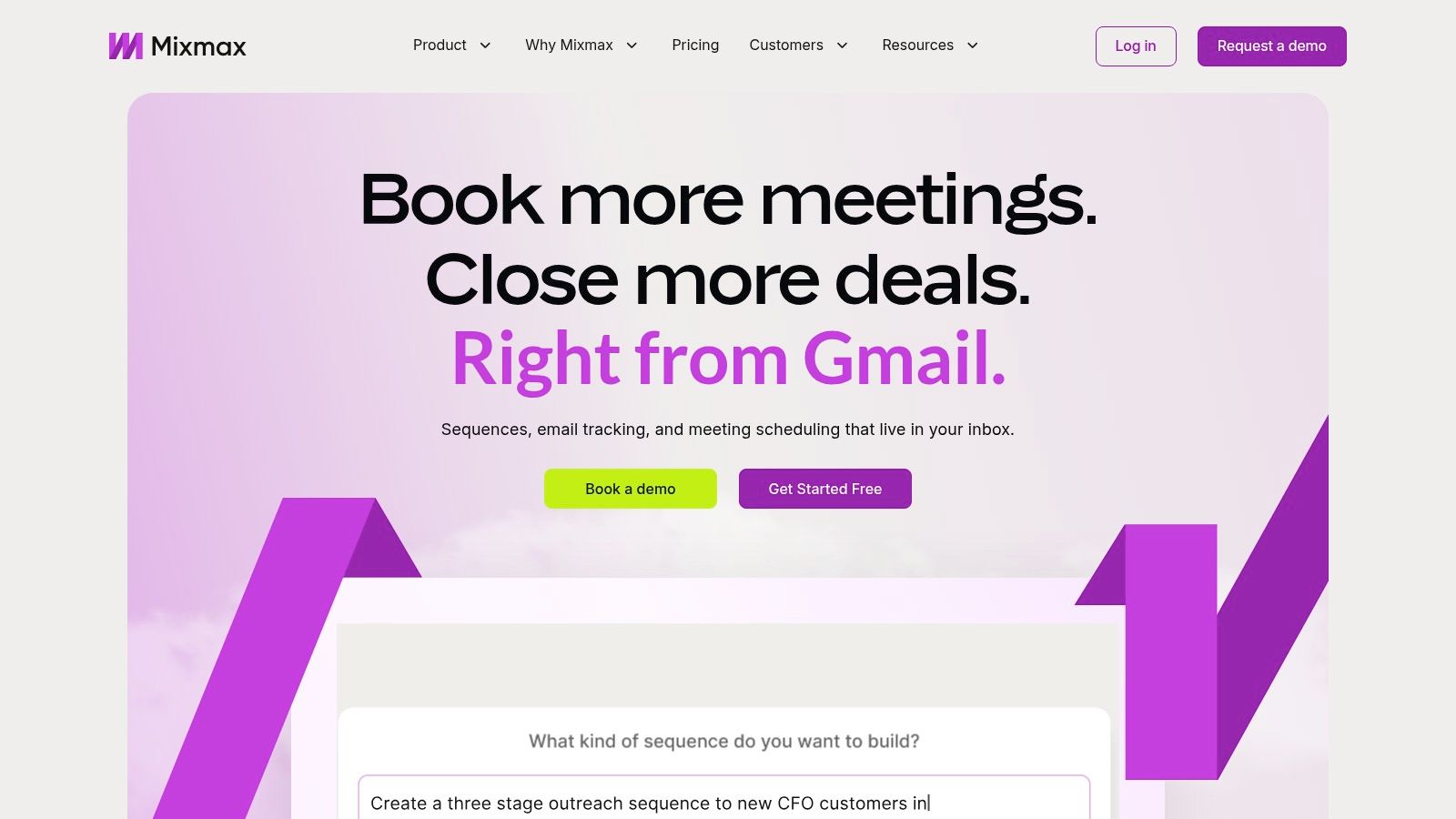
Mixmax works best for teams that want to stay close to the inbox. If your reps live in Gmail and want sequences, scheduling, snippets, and meeting workflow support without moving into a heavier enterprise sales engagement platform, Mixmax is a practical option.
I tend to recommend inbox-first tools when the team is small, fast-moving, and allergic to operational drag. In that environment, elegant execution inside the inbox often beats feature depth the team won't use.
Best for inbox-first execution
Mixmax is good at compressing the path from outreach to booked meeting. Sequences, templates, meeting scheduling, and AI helpers fit naturally into the seller's daily workflow, which helps adoption.
Why teams pick it:
- Fast deployment: Gmail-based teams can get value quickly.
- Workflow proximity: Reps don't need to leave the inbox for routine execution.
- Transparent buying motion: Easier to trial and evaluate than enterprise-first vendors.
The limitation is scope. Mixmax doesn't try to be your full revenue operating system, and that's usually the right product choice. But it means you'll still need stronger systems for deep analytics, heavy governance, or broader revenue intelligence.
There's also a sequencing truth worth stating plainly. Inbox-first tooling improves execution speed, but it doesn't create relevance. If your team sends generic messaging because no one researched the account, Mixmax just helps you send it faster. Visit Mixmax.
9. Lavender
Lavender is the writing coach on this list. It isn't a sequencer, a database, or a forecasting platform. It helps reps write better emails, faster. For junior SDRs especially, that can be valuable because weak email quality often comes down to structure, clarity, and tone long before it comes down to advanced strategy.
I like Lavender most as a coaching layer. It standardizes habits that good managers already teach manually, like brevity, readability, mobile-friendly formatting, and audience-aware messaging. That makes it useful for onboarding and quality control.
Useful coaching, but not a system of execution
Lavender is a good fit when your team already has a system for sourcing leads and sending outreach, but the copy quality is inconsistent. Real-time scoring and rewrite support can tighten writing quickly.
Its strengths are straightforward:
- Low-friction improvement: Reps get immediate feedback without a long training cycle.
- Useful for ramping new hires: It helps standardize basic outreach quality.
- Works inside common email environments: Chrome and Outlook support reduce workflow disruption.
The downside is that email coaching can only improve what it sees. If the lead is wrong, the signal is weak, or the offer doesn't match the account, the writing score won't save the campaign. This is a polishing tool, not a targeting tool.
That's the key trade-off. Lavender makes messages cleaner. It doesn't make them truer. The best use is pairing it with stronger research so the rep starts with a real hook, then uses Lavender to make that hook easier to read and respond to.
10. Gong
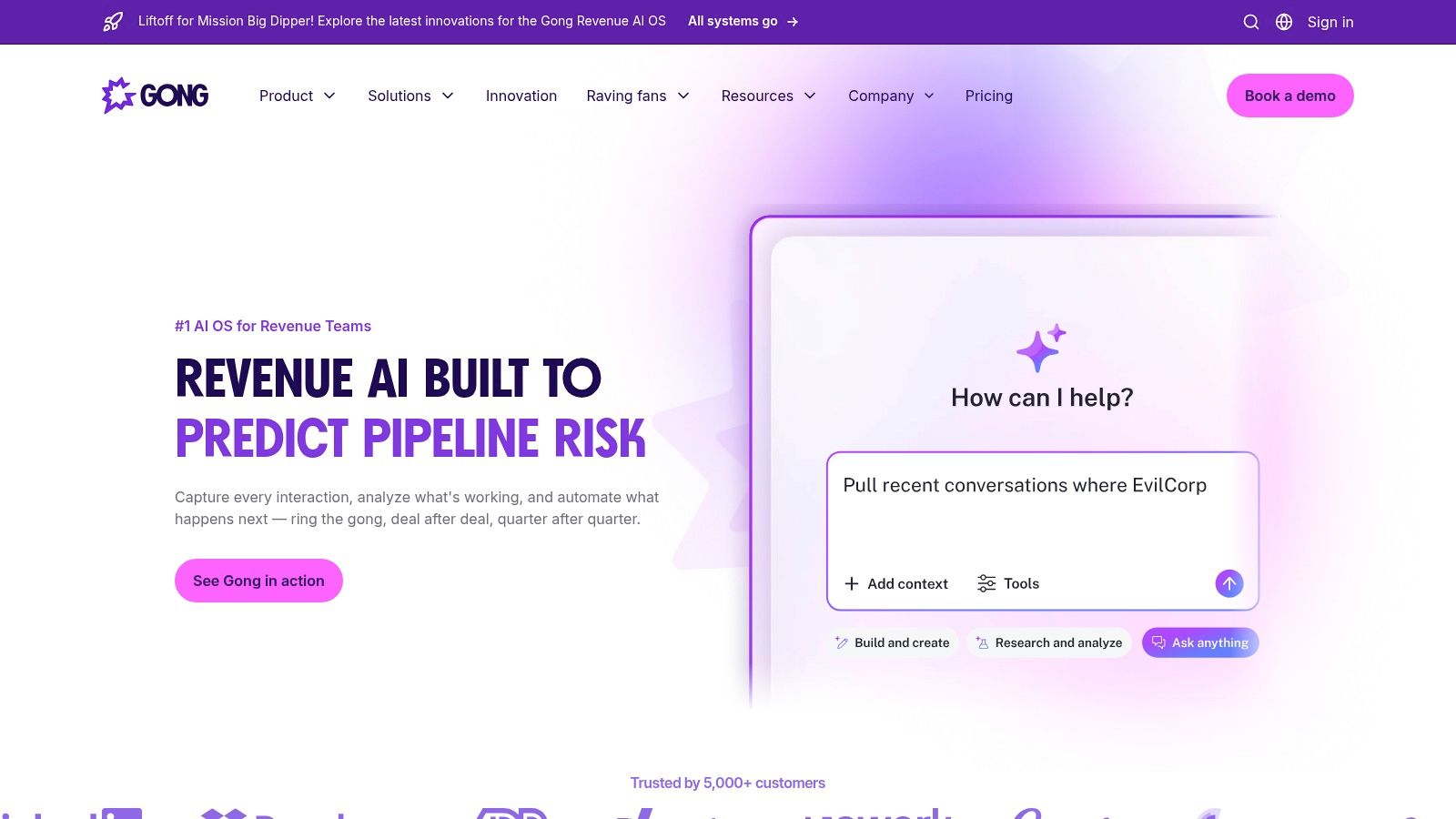
Gong is the intelligence layer. Once conversations happen, Gong captures them, summarizes them, and helps managers inspect deals and coach reps with actual evidence instead of memory. For sales leaders, that's where the value sits. Better coaching, better inspection, and fewer surprises hiding in the pipeline.
It's one of the strongest tools in this category when a team already has enough meeting volume to generate usable call data. Without that volume, the value takes longer to show up.
Best for coaching and deal inspection
Gong is strongest for organizations that want objective visibility into rep behavior and deal health. Managers can review patterns in calls, identify where discovery breaks down, and coach from specifics instead of general advice.
What it does well:
- Conversation visibility: Calls and emails become inspectable, searchable records.
- Manager effectiveness: Coaching gets faster and more consistent.
- Deal review support: Leaders can spot risk earlier when the system has enough activity to analyze.
Historical sales analytics research has tied integrated sales platforms with automation and AI to an average productivity increase of 46% within the first quarter of adoption, with reductions in sales cycle length and improvements in conversion for teams using these tools. The same body of research also notes that 81% of sales groups are now investing in AI to improve personalization and data quality. Those numbers underline why intelligence layers keep expanding inside modern revenue stacks.
The trade-off is cultural as much as technical. Gong creates value when managers coach and reps accept review as part of improvement. If nobody changes behavior after the insights show up, it becomes an expensive archive. Learn more at Gong.
Top 10 Sales Productivity Tools Comparison
| Product | Core features | Experience ★ | Value & ROI 💰 | Target 👥 | Unique ✨ |
|---|---|---|---|---|---|
| PitchSmart 🏆 | Parallel bulk research; signal-backed summaries; 3 email drafts; CSV import/export | ★★★★☆ (20–50 leads ≈10m; source-cited) | 💰 High, ~12 hrs saved/rep/week; reported open-rate lifts; no-CC free trial | 👥 SDRs/BDRs, outbound AEs, RevOps, agencies | ✨ Signal-cited personalization; keeps your lists; no charge for failed runs |
| Outreach | Cadence/sequence mgmt; AI assist; convo intelligence; deep CRM sync | ★★★★☆ enterprise-grade governance & coaching | 💰 Enterprise ROI; quote-based/complex pricing | 👥 Large sales orgs, compliance-focused teams | ✨ Robust governance, forecasting, Outreach Kaia |
| Salesloft | Cadence builder, Rhythm workflows, convo intel, CRM sync | ★★★★☆ strong frontline adoption & day-planning | 💰 Solid for mid→enterprise; modular pricing | 👥 Field sellers, mid-market & up | ✨ Rhythm prioritized workflows; strong enablement |
| Apollo.io | 200M+ contact DB, enrichment, sequencing, dialer | ★★★☆☆ fast time-to-value for SMBs | 💰 Good when you need data+engagement; credit limits to model | 👥 SMBs, growth teams, SMB sales ops | ✨ Single vendor for data + engagement |
| HubSpot Sales Hub | CRM-native sequences, CPQ, calling, dashboards | ★★★★☆ easy onboarding; unified front-office | 💰 Predictable per-seat pricing; native marketing/service handoff | 👥 Startups & SMBs scaling process maturity | ✨ Native Hubs alignment; transparent pricing |
| Clay | Visual workflows, bulk enrichment, de-dup, AI steps, API | ★★★☆☆ flexible but ops-heavy for complex flows | 💰 Customizable costs; BYO API keys to control spend | 👥 Data/ops teams, growth engineers | ✨ Multi-source enrichment with transparent attribution |
| Orum | Parallel dialing (multi-line), voicemail detection, CRM sync | ★★★☆☆ boosts live connects in call blocks | 💰 Strong ROI if direct dials & list quality are good; tiered packages | 👥 High-volume SDR dialing teams | ✨ Parallel dialer up to 5 lines; auto-disposition |
| Mixmax | Inbox-first sequences, Meeting & Inbox Copilots, templates | ★★★★☆ fast deploy for Gmail/Workspace teams | 💰 Transparent pricing; free tier for evaluation | 👥 Gmail/Google Workspace sellers, SDRs | ✨ Inbox & Meeting Copilots for in-inbox workflows |
| Lavender | Real-time email scoring, coaching, AI rewrites | ★★★☆☆ tangible reply uplift; low friction | 💰 Low-to-mid cost coaching; needs a sequencer/CRM | 👥 SDRs, email-coaching teams | ✨ Live scoring + team coaching dashboards |
| Gong | Call recording/transcription, coaching, deal insights, AI summaries | ★★★★☆ benchmark for conversation intelligence | 💰 Enterprise-grade value with coaching culture & volume | 👥 Sales managers, enablement, enterprise teams | ✨ Deep conversation analytics & automated summaries |
How to Build Your Ultimate Productivity Stack
A tool only helps if it fits the actual constraint in your workflow. That sounds obvious, but many teams still buy software by category instead of by bottleneck. They know they need “sales productivity tools,” so they add a sequencer, then a dialer, then a conversation platform, and still wonder why outbound feels noisy and inefficient.
Start with the primary failure point. If list quality is weak, fix Research first. If reps have strong lists but inconsistent follow-up, fix Engagement next. If meetings are happening but deals stall and coaching is vague, add Intelligence. That order matters because each layer depends on the one before it.
The cleanest framework is Research, then Engage, then Analyze.
Research means the rep has a reason to contact the account. Not a generic industry line. Not a thin personalization token. A real signal tied to something public and relevant. This is why a research-first platform like PitchSmart belongs at the foundation. It enriches existing lead lists with verifiable buying signals, surfaces activity-based conversational hooks, and prepares personalized outreach before the sequencer ever starts working. That changes the quality of every downstream action.
Engagement means using platforms like Outreach, Salesloft, HubSpot, Apollo, Mixmax, or Orum to execute consistently at the right volume. These tools matter, but they are force multipliers. If the upstream research is weak, they multiply weak execution. If the upstream research is strong, they multiply relevance.
Analyze means reviewing what happened. That's where Gong and similar intelligence tools earn their keep. Managers can inspect calls, look for deal risk, and coach from evidence. But again, this layer performs best when the earlier stages are already healthy. Strong conversation intelligence cannot fix poor account selection.
The best stack is rarely the biggest stack. It's the stack with the fewest broken handoffs.
There's also a stack design issue that RevOps teams often underweight. Tool sprawl creates hidden cost. Every disconnected workflow creates more cleanup, more context switching, and more distrust in the data. If you're evaluating a new platform, ask whether it removes work or just moves work. A tool that creates cleaner inputs and better outputs usually beats one that adds another dashboard.
For most outbound teams, the strongest practical setup looks like this. Use a sourcing tool if you need contacts. Use PitchSmart to turn that raw list into signal-backed research, segmentation, and personalized outreach hooks. Push those outputs into your engagement layer. Then use your intelligence layer to coach and refine the motion. That's how you maximize your output.
Productivity isn't about buying more software. It's about stopping the manual research cycle that keeps reps busy and underpowered. Build the stack around better inputs, and the rest of your tools start doing their job.
If your team already has lead lists but still spends too much time researching accounts one by one, PitchSmart is the fastest way to fix the front end of outbound. Upload a list, let it run bulk research across your accounts, and give reps source-backed hooks plus relevant outreach they can put to use. It's a practical way to replace generic cold email with evidence-driven messaging and get your sellers back to selling.