Your reps likely spend only 28 to 30% of their week selling, while 70 to 72% disappears into research, CRM updates, internal meetings, and admin work, according to sales rep time allocation analysis. That's the bleeding neck in modern outbound. Teams don't lose pipeline because they lack hustle. They lose it because their process forces good reps to act like part-time analysts and part-time data-entry clerks.
Bad prospecting usually looks busy from the outside. Reps bounce between LinkedIn, company sites, hiring pages, CRM records, and random news tabs. Then they stitch together a generic email, send it late, and wonder why nobody replies. The issue isn't effort. The issue is that manual research doesn't scale, and unresearched outreach gets ignored.
That's why most sales prospecting techniques break down in real teams. The tactic itself may be sound, but the execution model is broken. If every rep has to research every lead one by one, even strong tactics collapse under volume, inconsistency, and delay.
The fix is operational. You need techniques that work in real B2B environments, plus a workflow that removes the research bottleneck. That means bulk lead research, signal-based segmentation, activity-driven hooks, and automated sequences built from real buyer context. Tools like PitchSmart fit that model because they let teams research lists in parallel, pull in recent signals, segment by buying cues, and launch email and LinkedIn sequences without forcing reps to live in 20 browser tabs.
Below are 10 sales prospecting techniques that still work for modern B2B teams, and how to run each one without wasting your team's day.
1. Activity-Based Prospecting with Recent Online Signals
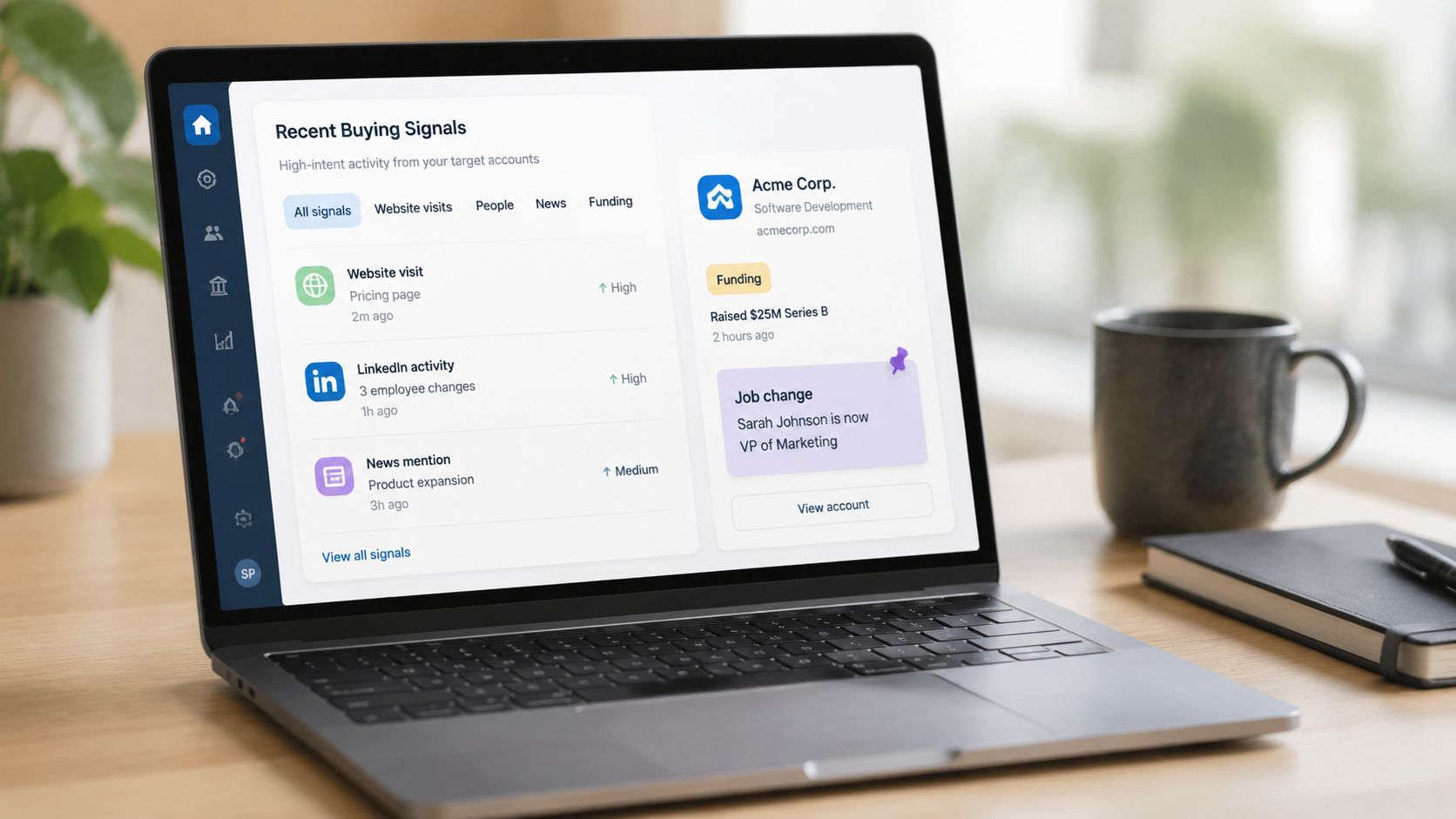
The fastest way to make outbound relevant is to contact accounts when something changed. Funding news, leadership moves, job postings, pricing-page visits, product launches, and hiring spikes all give your rep a real reason to reach out. Without that trigger, most outreach sounds like it came from a sequence tool and a stale list.
Manual research proves to be the biggest time sink. A rep can find signals, but they'll spend the day hunting instead of selling. A better setup pulls those signals across a list in bulk, ties each one to a source, and gives the rep a usable opener. That's the practical value of a platform like PitchSmart for signal-based outbound research. It turns scattered account research into a repeatable workflow.
Move fast on the trigger
AI-driven prospecting works best when it combines active buying signals with message personalization. Teams using AI prospecting tools have reached an 81% adoption rate globally, and signal-personalized outreach generates reply rates between 15 to 25%, compared with a traditional outbound average of about 3%, according to AI sales prospecting benchmark data.
A practical example is a BDR who sees a target account announce a new VP of Sales, spots open hiring for SDRs, and sends a short note about ramp speed and sequence consistency. That opener feels earned because it is. It references a visible change, not a canned pain point.
- Layer signals: Combine company news, leadership changes, and web activity so reps don't chase weak triggers.
- Reference the exact event: Mention the funding round, role change, or hiring pattern plainly. Don't hide it behind vague personalization.
- Launch quickly: Signal-based outreach loses power when it sits in a queue for days.
Practical rule: If your rep has to manually discover the trigger, verify it, draft the hook, and build the sequence alone, the technique won't scale.
2. Hyper-Targeted List Segmentation Based on Buying Signals
Many organizations segment too broadly. “Mid-market SaaS” isn't a workable prospecting segment if every company inside it has different pressures, different tools, and different timing. Strong segmentation creates smaller cohorts that share a useful context, then assigns messaging that matches that context.
Good micro-segments often mix fit and timing. Think “cybersecurity companies hiring enterprise AEs,” “fintech firms with new revenue leadership,” or “healthtech teams expanding implementation roles.” Those groups give reps a cleaner angle than generic ICP filters ever will.
Build segments that sales can actually use
The strongest prospecting setups don't rely on a single channel. SPOTIO's survey found that the most effective B2B approach combines cold calling, personalized email, and LinkedIn social selling across 6 to 8 touches, while B2B field reps spend only 11% of their total work time on prospecting research, according to SPOTIO's sales prospecting guide. That's why segmentation has to reduce effort, not add another planning layer.
One team might split a list into agencies, in-house mid-market teams, and enterprise operators using different systems. Another might segment HR software buyers by recent executive hires and active recruiting. In both cases, the win comes from making the message sharper before the first touch goes out.
Segmentation fails when RevOps builds categories that look good in a spreadsheet but don't change the rep's message.
A few rules keep this useful:
- Start small: Build three or four high-conviction segments first.
- Use observable signals: Segment on facts you can verify, not assumptions about intent.
- Score automatically: Bulk research and signal scoring should place accounts into cohorts without rep cleanup.
3. Conversational Email Sequences Seeded from Real Buying Signals
Most outbound sequences fail because they read like campaigns, not conversations. The rep dumps a value proposition, adds a vague CTA, and hopes volume does the rest. Buyers can tell when the message was written for a list, not for them.
Signal-seeded sequences work differently. The first message starts with a real event. The second expands on why that event matters. The third gives the buyer an easy next step or graceful exit. In practice, a three-step sequence is often enough if each message says something specific and moves the conversation forward.
Write like a person who noticed something real
Keep these emails short. A solid first touch usually points to one verified trigger, one relevant observation, and one soft ask. If a company just opened roles in customer success after a product expansion, the message should stay there. Don't stuff it with five features and a fake compliment.
A simple scenario: step one references a recent acquisition and asks whether integration pressure is changing team priorities. Step two shares a short insight tied to similar post-acquisition handoffs. Step three closes the loop with a low-friction question or opt-out.
The structure matters less than the tone:
- Step one: Open with the signal.
- Step two: Add credibility, not a full pitch.
- Step three: Ask for a small response, not a large commitment.
Modern teams also need sequence creation to happen fast. If reps are writing every signal-based email from scratch, quality drops by the end of the day. PitchSmart's automated 3-step email and LinkedIn sequences seeded from recent hooks solve that problem because the signal research and message draft happen together, not as separate tasks.
Buyers respond to relevance first. Clever copy comes second.
4. Warm Outreach via Mutual Connections and Warm Intros
Warm intros outperform cold outreach because trust transfers. If a current customer, advisor, investor, or partner can vouch for the relevance of the conversation, the rep starts with credibility instead of suspicion. That matters because benchmark data shows 88% of prospects only buy when they see the seller as a trusted advisor, according to prospecting trust and cadence benchmarks.
That said, teams often underuse warm paths because finding them manually is tedious. Reps check LinkedIn, compare notes in Slack, and message executives for favors one at a time. The tactic is good. The process is clumsy.

Make the intro easy to send
A clean warm-intro motion starts before outreach. Import customer lists, investor portfolios, partner contacts, and executive networks. Then match those relationships against target accounts so reps know where a credible path exists.
A recruiting firm, for example, might notice that a happy client is connected to a target CEO. A SaaS company may find an investor overlap with a strategic account. In both cases, the rep shouldn't send a long explanation to the introducer. They should send two short lines the contact can forward without editing.
- Prioritize warm first: If a warm path exists, use it before cold outreach.
- Write the forwardable note: Make it easy for the introducer to hit send.
- Track intro requests: Warm outreach still needs process discipline.
Warm intros don't replace outbound. They narrow resistance and shorten the path to a first meeting.
5. Intent Data and Technographic Prospecting
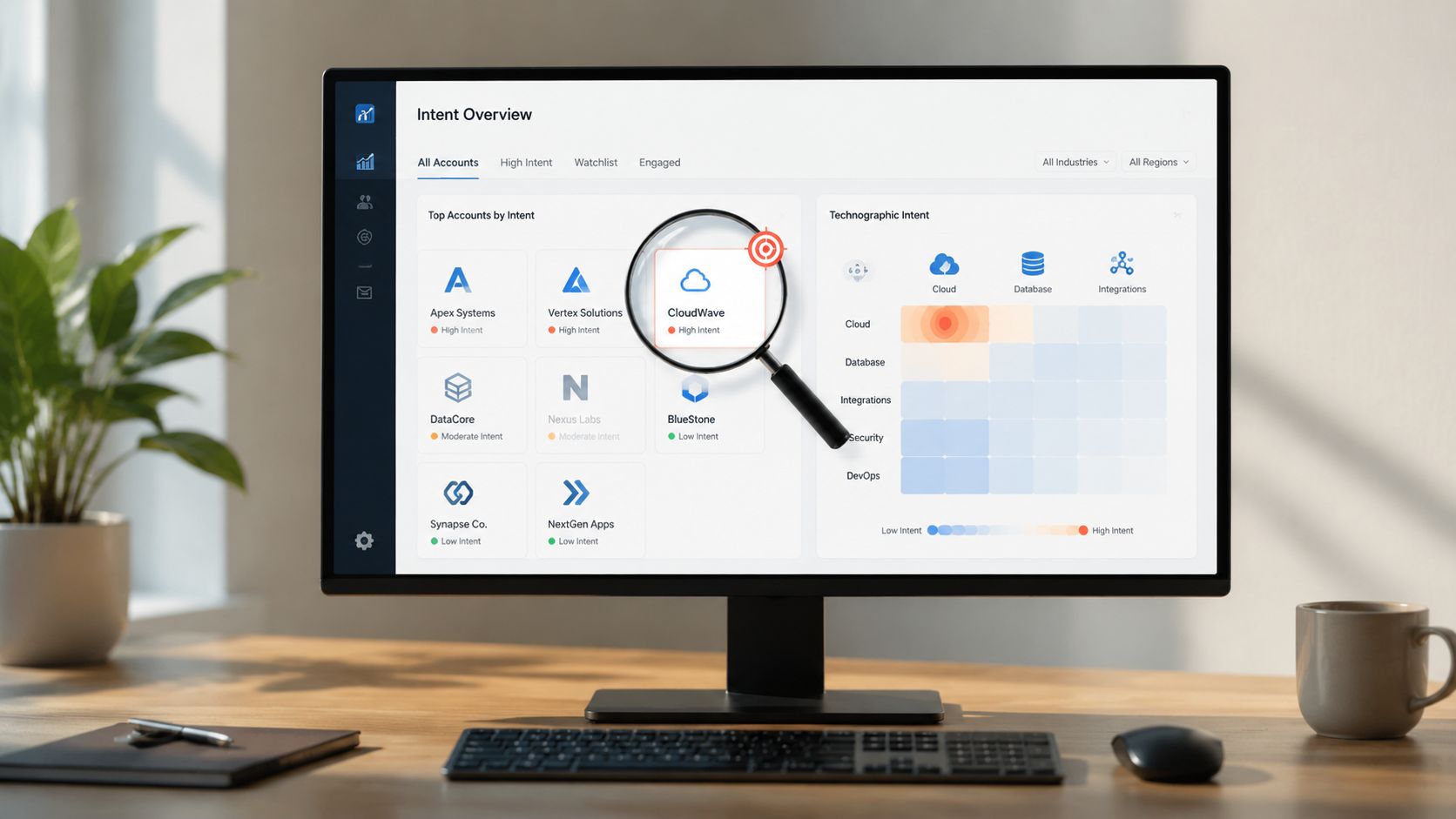
Intent without fit creates noise. Fit without timing creates slow pipeline. Put the two together and you have a prioritization model sales can trust.
This technique works well when reps know both what the account may be researching and what tools it already uses. If a company shows interest around pipeline forecasting and already runs a stack adjacent to your product, your rep has a better reason to call now and a sharper message when they do.
Don't treat all intent the same
The problem is volume. Intent feeds can dump a pile of “interesting” accounts into the queue, and reps end up chasing weak signals. Better teams weight first-party behavior more heavily, then sharpen the list with technographics, leadership changes, hiring patterns, or recent company events.
If a prospect is researching your category and running a competitor, that's a very different motion than an account that casually consumed adjacent content. One gets immediate, direct outreach. The other may sit in a lighter nurture path.
For teams building this motion at scale, pricing matters less than throughput. What you want is a system that can segment by buying signals, enrich the list, and feed outreach automatically. That's where PitchSmart pricing for outbound research workflows becomes relevant. You're buying back rep time, not just adding another data source.
- Use intent to rank, not replace judgment: Some signals matter more than others.
- Pair intent with stack data: Competitive displacement messaging needs context.
- Route the strongest accounts fast: Delay weakens time-sensitive intent.
6. Account-Based Marketing and Account-Based Sales Prospecting
ABM and ABS work when the account is large enough to justify the effort and the team has the discipline to coordinate. They fail when teams claim to run ABM but really just send slightly personalized emails to one contact at a named account.
True account-based prospecting means mapping the committee, aligning sales and marketing, and controlling the story across channels. It's slower to set up than broad outbound, but it gives you a real shot at larger, more complex deals.
A short walkthrough helps frame the approach:
Map the committee before you launch
Committee mapping is where many organizations stall. Reps can find one or two obvious stakeholders, but they rarely map the full set of decision-makers, evaluators, champions, and blockers at scale. That's a mistake. Expert guidance on modern prospecting emphasizes that mapping the full buying committee yields stronger conversion than single-threaded outreach, as noted earlier in the trust and workflow benchmarks.
A solid ABM motion might target a handful of strategic accounts in energy, cybersecurity, or fintech, then build coordinated touches for operations, finance, IT, and executive stakeholders. Marketing supports with account-specific content. Sales runs outreach with different hooks based on each person's role.
- Keep the list tight: Strategic account programs break when they become mass campaigns.
- Research the account once, use it many times: Shared account intelligence should support every stakeholder touch.
- Coordinate channels: Email, LinkedIn, calls, events, and direct mail should reinforce the same narrative.
One strong account plan beats a bloated target list that nobody can work properly.
7. LinkedIn-First Outreach and Social Selling
LinkedIn is useful because buyers already expect professional conversation there. Email inboxes are crowded, phone pickup rates vary, and forms route slowly. LinkedIn gives reps a cleaner place to build familiarity before they ask for time.
That doesn't mean blasting connection requests with generic copy. The best LinkedIn-first workflows combine profile research, recent activity, mutual connections, and a message that feels native to the platform. Often the first win isn't a meeting. It's recognition.
Use LinkedIn as a conversation layer
A practical sequence might start with a connection request tied to a recent post, then a short follow-up after acceptance, then an email that references the same signal. The channels reinforce each other. They don't compete.
If your team needs examples of how outbound content and signal-backed messaging should sound, the PitchSmart blog on outbound prospecting workflows is a useful reference point. The broader lesson is simple: LinkedIn works best when it supports a multi-channel motion, not when reps treat it like a separate universe.
A few habits matter more than cleverness:
- Use a real reason to connect: Shared context beats generic networking language.
- Engage before asking: A comment or reaction can warm the ground.
- Reference LinkedIn activity in email: That creates continuity across channels.
LinkedIn-first doesn't mean LinkedIn-only. It means using the platform to earn attention before the inbox ask lands.
8. Vertical-Specific and Niche-Focused Prospecting
Generalist messaging is easy to produce and easy to ignore. Vertical prospecting works because it forces precision. The buyer can hear whether your rep understands the industry's constraints, language, systems, and risk profile.
This approach is especially strong for B2B SaaS teams with a clear pattern of success in one or two markets. Instead of chasing every plausible fit, they double down where they already know the common pains, common objections, and common buying process.
Go deep enough to sound credible
A payments provider selling into financial services shouldn't sound like it's talking to ecommerce brands. A healthcare workflow vendor needs to understand operational complexity, procurement friction, and compliance sensitivity. Buyers notice the difference fast.
One of the more overlooked angles in niche prospecting is timing the recovery cycle, not just chasing obvious growth sectors. Better Proposals highlighted a gap in common prospecting advice: teams often target only rising industries and ignore struggling sectors that are beginning to recover, even though recovery timing can create better receptivity, according to overlooked prospecting timing guidance.
That creates a useful niche play. If you track job postings, funding activity, leadership movement, and sentiment shifts in a vertical that's coming back, your reps can reach buyers before the market gets crowded again.
- Pick narrow lanes: One or two verticals is enough to build a serious playbook.
- Build vertical assets: Messaging, talk tracks, and examples should reflect the niche.
- Watch recovery signals: Don't wait until every competitor notices the upswing.
9. Content-Driven Inbound Prospecting
Inbound interest is still prospecting. It just starts with a warmer signal. Too many teams treat inbound as order-taking, pass every form fill to an SDR, and then wonder why conversion quality is inconsistent.
The better motion is to qualify inbound with the same discipline you'd apply to outbound. Look at company fit, role relevance, content consumed, product signals, and recent account activity before the rep reaches out. Then tailor the follow-up to what the buyer engaged with.
Treat inbound like prioritized outbound
Trust and cadence matter. A good inbound follow-up doesn't sound automated, even when automation runs underneath it. If someone downloads a technical asset, signed up for a webinar, or spent time on solution pages, the rep should respond with context, not a stock “just checking in” message.
The old persistence problem shows up here too. Research cited by Zendesk, drawing on KLA Group findings, shows that 70% of salespeople stop after four to six outreach attempts even though the average number of attempts required to connect is nine, and a strong cadence often spans 15 to 17 touches over 20 to 24 business days with no more than five business days between contacts, according to Zendesk's summary of KLA Group prospecting data.
Most teams don't have a lead problem. They have a disciplined follow-up problem.
For inbound, that means using the signal to start the conversation, then sticking to a real sequence instead of giving up early.
10. Phone-Based Outreach and SDR Playbooks
According to Cognism's review of cold calling benchmarks, top teams still use the phone because live conversations create feedback faster than any other outbound channel, especially when reps call accounts that already show fit and timing signals. Phone is not a volume tactic. It is a prioritization tactic.
That distinction matters in operations. A weak calling program hands SDRs a broad list, a rigid script, and a daily dial target. A strong one routes calls only after the account clears basic fit checks and a relevant trigger is attached to the record. That is how teams protect rep time and keep call blocks focused on conversations with a reason to happen now.
Build phone outreach around research automation
The operational bottleneck is not dialing. It is prep.
If reps have to open six tabs, read the company site, scan LinkedIn, check recent funding, review CRM history, and then write their own opener, the phone channel collapses under its own labor cost. The fix is simple. Automate the intelligence gathering before the call task is created.
A workable SDR phone playbook includes:
- A narrow call queue: Only send accounts that match ICP, have clean contact data, and show a recent trigger.
- A call reason: Attach one concrete signal to the task, such as hiring growth, new leadership, intent surge, form activity, or a recent sequence engagement.
- A talk track framework: Give reps an opener, two discovery paths, one objection response, and a clean close for next steps.
- A follow-up path: Log the outcome automatically and trigger the right follow-up email, voicemail step, or recycle rule based on disposition.
- A review loop: Track connect rate, conversation rate, meeting rate, and no-show rate by trigger type, list source, and rep.
That structure gives SDRs enough context to sound informed without forcing them into a robotic script.
Use scripts as decision trees
The best phone scripts are short because the rep already has the research. They do not need a paragraph-long intro. They need three things: why they called this account, a question that earns a response, and a next-step ask that fits the situation.
I have seen teams improve conversation quality by cutting scripts in half and improving pre-call context instead. Reps stop sounding rehearsed because they are responding to a real account signal, not reading generic value props to anyone who picks up.
A practical pattern looks like this:
- Opening: State who you are and the reason for the call.
- Context: Reference the trigger attached to the account.
- Question: Ask about the current priority, process, or problem tied to that trigger.
- Branch: If interest is low, confirm timing and route to nurture. If interest is real, move to qualification and book the next meeting.
Phone works best as part of a coordinated SDR system. Calls should sit inside a broader workflow, but the call itself should be reserved for the accounts where speed, nuance, and live objection handling give you an advantage.
10-Method Sales Prospecting Comparison
| Approach | 🔄 Implementation Complexity | ⚡ Resource Requirements | ⭐ Expected Outcomes | 💡 Ideal Use Cases | 📊 Key Advantages |
|---|---|---|---|---|---|
| Activity-Based Prospecting with Recent Online Signals | Medium–High: needs real‑time pipelines and signal validation | Data ingestion, monitoring tools, automation for templates | Higher response rates (3–5x vs generic); more credible outreach | SDR teams targeting timely opportunities and fast follow-up | Signal-backed hooks, source attribution, prioritized outreach |
| Hyper-Targeted List Segmentation Based on Buying Signals | Medium: setup segmentation logic and scoring | Good data quality, segmentation engine, multiple templates | Increased relevance and reply rates; clearer segment analytics | Teams with diverse buyer profiles needing tailored messaging | Micro-cohorts, automated routing, lower unsubscribe rates |
| Conversational Email Sequences Seeded from Real Buying Signals | Medium: sequence design + signal insertion automation | Template library, signal integration, cadence controls | Higher reply and lower unsubscribe rates; trackable hooks | Cadence-driven outreach to prospects with verifiable signals | Builds dialogue (not broadcast); automated personalization |
| Warm Outreach via Mutual Connections and Warm Intros | Low–Medium: manual coordination; mapping required | CRM/LinkedIn integrations, network data, human follow-up | Much higher reply/meeting likelihood; warmer conversations | Companies with existing customers, investors, or partner networks | Trust-based intros, higher meeting quality, low spam risks |
| Intent Data and Technographic Prospecting | High: integrates third‑party feeds and scoring models | Intent providers, technographic datasets, analytics | Highest conversion for high‑intent accounts; shorter cycles | Prioritizing active researchers and competitive displacement plays | Strong prioritization; enables targeted competitive messaging |
| Account-Based Marketing (ABM) and Account-Based Sales (ABS) | Very High: deep research and cross-team orchestration | Significant budget, coordinated sales+marketing resources | Higher win rates and CLTV for targeted accounts | Winning large ACV deals for 20–100 high-value accounts | Multi-touch, stakeholder-mapped campaigns with ROI focus |
| LinkedIn-First Outreach and Social Selling | Medium: sustained manual engagement and content effort | Time for genuine engagement, social tools, profile upkeep | Higher reply rates on platform; builds credibility over time | Long-cycle deals and outreach to senior execs on LinkedIn | Social proof, soft qualification, discoverable buying signals |
| Vertical-Specific and Niche-Focused Prospecting | Medium–High: requires domain expertise and assets | Vertical content, case studies, trained reps or hires | Higher resonance and conversion within chosen verticals | Companies doubling down on 1–2 target industries | Deep relevance, faster trust-building, efficient research |
| Content-Driven Inbound Prospecting | Medium–High: content strategy and lead nurture setup | Content production, SEO, marketing automation, events | Lower CAC over time; more informed, qualified leads | Organizations investing in long-term demand generation | Scalable nurture, authority building, feeds outbound signals |
| Phone-Based Outreach and SDR Playbooks | Medium: process and coaching intensive | Trained SDRs, call tech, call recording/coaching resources | Immediate two‑way qualification; strong conversion for prioritized lists | High‑intent accounts where voice cuts through email noise | Direct engagement, rich qualitative intel, fast qualification |
Turn Prospecting from a Chore into a Competitive Edge
Gartner found that half of sellers feel overwhelmed by the number of tools they use, according to sales productivity research on platform overload. That shows up in prospecting fast. Reps jump from LinkedIn to company sites to the CRM to sequencing tools, then spend prime selling hours stitching together context that should already be in front of them.
The underlying constraint is operational. Good teams already know the major sales prospecting techniques. The problem is executing them consistently without burning rep time on one-by-one research.
Manual research slows every method in this article. It delays first-touch speed, weakens personalization because reps cut corners, and makes segmentation stale by the time outreach goes live. It also creates avoidable variance. One rep finds a strong trigger event and writes a sharp opener. Another misses it, sends a generic message, and gets ignored. Same territory. Same list quality. Different workflow.
The fix is to build prospecting around signal capture and distribution. Pull accounts from the CRM or upload a CSV. Enrich the list in bulk. Identify recent online activity, hiring patterns, funding updates, tech changes, engagement signals, and relationship paths. Score and segment those accounts before the rep starts writing. Then push the best hooks directly into email, LinkedIn, and call workflows.
That changes the rep's job in the right way. Reps spend less time hunting and more time judging relevance, choosing the angle, and handling live buyer responses. That is the part humans should own.
PitchSmart fits that operating model because it addresses the actual bottleneck. It runs bulk, customizable lead research across your list, ties qualifiers and buying signals back to the original source, surfaces recent conversational hooks, segments accounts by fit and timing, and drafts 3-step email and LinkedIn sequences from those signals. The gain is consistency at scale. Teams get higher-quality outreach without asking SDRs and BDRs to research every contact from scratch.
There is also a credibility advantage. Outreach grounded in a visible signal feels earned. Buyers can tell when a rep noticed something real versus dropping a generic template into a sequence. That difference affects reply rates, call quality, and whether the second touch gets opened at all.
If you lead RevOps, sales ops, or outbound, treat prospecting as a system design problem. Set up the research layer once. Route verified signals into the tools reps already use. Measure speed to first touch, reply rates by signal type, meetings booked per researched account, and rep hours recovered from manual prep.
Prospecting gets better when the research work is structured, automated, and attached to clear workflows. Give reps researched accounts, verified triggers, and message drafts with source context. That is how prospecting becomes a repeatable advantage instead of a daily grind.
PitchSmart helps outbound teams replace one-by-one prospect research with bulk, signal-backed workflows that reps can use. Upload a list, pull accounts from your CRM, uncover recent buying signals and conversational hooks, segment leads by fit and timing, and launch automated email and LinkedIn sequences without drowning in manual prep. If you want prospecting that's faster, cleaner, and easier to scale, start a free trial with PitchSmart.